How Lemon Vibrators Work Better After Menopause
Honestly, the design of lemon vibrators makes them brilliantly suited for post-menopausal bodies. That's not marketing. That's physiology meeting engineering in a way that actually matters.
Menopause changes tissue thickness, lubrication speed, and blood flow to the genital area. It does not diminish nerve sensitivity. It does not kill desire or orgasm capacity. What it does do is shift the way your body responds to direct mechanical friction. And that's where the suction-based design of lemon clitoral vibrators becomes genuinely game-changing.
Why tissue changes matter (and why they don't have to)
When estrogen drops, vaginal and vulval tissues thin slightly. They stay elastic, but they become more delicate. Direct vibration that felt perfect at 35 can feel too intense at 55. Some people report numbness. Others feel rawness or discomfort they never experienced before.
This isn't a sign something's broken. It's a sign your nervous system is asking for a different approach.
That's where lemon vibrators differ fundamentally from traditional vibrators. Instead of rapid, repetitive oscillation against sensitive tissue, they work through gentle suction and pulsing. This stimulates the same nerve clusters without the same mechanical abrasion. The Lem vibrator and other lemon sucker designs create a seal over the clitoris, then pulse inward. You get intense sensation without the friction.
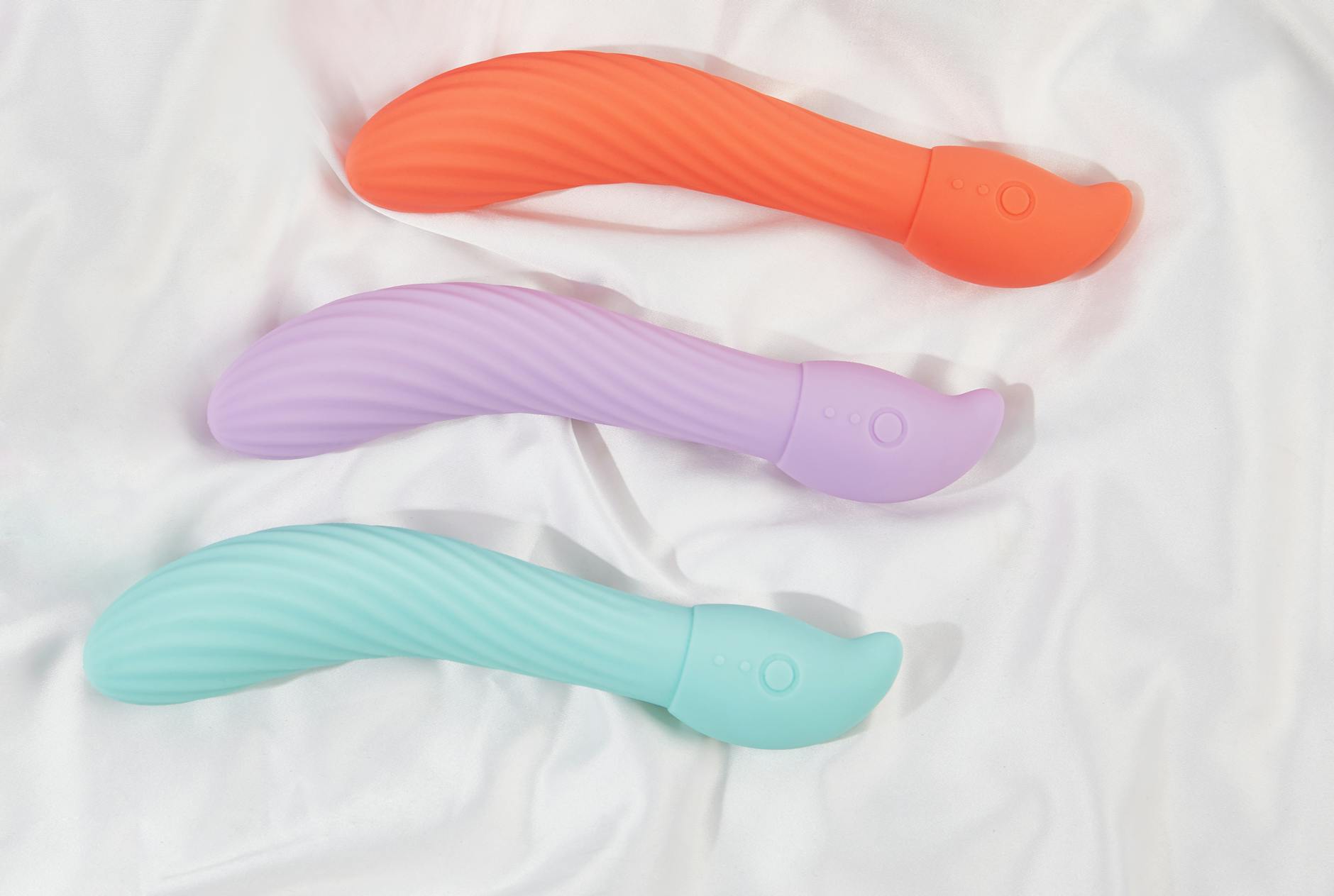
Photo by IFONNX Toys on Pexels
How blood flow changes shift what works
Arousal has always involved blood filling the clitoral tissues, creating engorgement and sensitivity. Post-menopause, that engorgement happens more slowly and sometimes incompletely. Your tissues don't swell as dramatically as they once did.
Traditional vibrators rely partly on that swelling. They assume your tissue is already firm and responsive. Lemon clitoral vibrators, by contrast, work well whether you're fully engorged or just warming up. The suction mechanism creates its own engagement. You don't need your body to do all the heavy lifting.
This is why "foreplay takes longer now" is not actually a downside. It's a redirect. You're not broken. You're learning what actually turns you on when the old shortcuts stop working. And most people find that turns out to be more interesting than they expected.
The warm-up window (and why it's not a penalty)
Pre-menopause, many people could jump to direct clitoral stimulation quickly. Post-menopause, you might need 10 to 20 minutes of whole-body attention first. That's not a loss of function. That's your body being honest about what it needs.
During that warm-up phase, you have options. Manual touch. Kissing. Internal stimulation. Grinding. A partner's attention. Once blood flow is engaged and tissues are responsive, lemon vibrators become exponentially more effective. The build-up isn't a barrier to pleasure. It's the pleasure itself.
Many post-menopausal people report their best orgasms happen not because stimulation is stronger, but because they've finally given themselves permission to feel the whole arc of arousal instead of rushing through it.
Starting with lower intensity settings
If you're new to lemon clitoral vibrators post-menopause, this is essential. Even though suction-based stimulation is gentler than traditional vibration, you don't want to start at full intensity on sensitive tissue.
Begin with pattern 1 or 2 on the lowest setting. Let your body acclimate. You're learning how this different type of stimulation feels on your tissues. Some people work up to patterns 3 to 5 over weeks. Others prefer staying at lower settings permanently. Neither approach is wrong.
The beauty of lemon vibrators is the control. You're not locked into one sensation. You're exploring what works for your body right now, not recycling what worked five years ago.
Lubrication becomes a practical tool, not a sign of dysfunction
Post-menopausal bodies produce less natural lubrication. Full stop. This is not failure. It's biology. Water-based lubricant stops being optional and becomes part of your routine. This is true whether you're using a lemon sucker, a traditional vibrator, or having partnered sex.
Water-based lube works beautifully with silicone toys (lemon vibrators are silicone). It's non-staining, easy to clean up, and responsive to body temperature. Use it generously. Reapply if you're going longer than 15 minutes. Your tissues thank you.
Many of my clients report that adding this one tool back into their routine transforms the experience. Not because they needed it before, but because now it's honest about what helps.
Pelvic floor engagement and release
Your pelvic floor does something most people never think about until it matters. It tightens during arousal and orgasm, then releases afterward. Post-menopause, these muscles can become tighter overall due to lower estrogen. That's not inherently a problem, but it can mean you need to practice releasing them consciously.
Before using a lemon clitoral vibrator, spend a minute or two doing pelvic floor relaxation. Breathe deeply. Imagine the muscles softening. Some people find deep breathing alone helps. Others use specific relaxation techniques. This preps your body to respond rather than clench.
During stimulation, stay aware of whether you're tensing those muscles. It's easy to do when sensation feels different or less intense than you expected. If you notice tightness, consciously relax. This single shift often deepens the sensation and makes orgasms more satisfying.
Why you might need a different toy now
If you've been using the same vibrator for years, post-menopause might be the time to try something new. The Lem vibrator, a lemon sucker design, offers a fundamentally different stimulation pattern than traditional vibrators. Some people switch to air-suction toys specifically after menopause. Others experiment with lower-intensity or broader-surface options.
You can also check out our guide on finding your ideal sensitivity setting on lemon vibrators to see if a different setting or pattern shift is what you actually need before switching toys entirely.
The point is simple. Your body changed. Your tools can change too.
When sensation feels muted (and what helps)
Some post-menopausal people report that familiar stimulation suddenly feels distant or dull. This isn't loss of capacity. This is sometimes reduced blood flow to nerve endings, sometimes changed nerve sensitivity, sometimes the brain simply needing different input to register as pleasurable.
Lemon clitoral vibrators often solve this because suction creates a completely different sensory experience than vibration. The seal, the pulsing pressure, the changing patterns. Your nervous system receives novel input, which often registers as more intense even if the technical intensity is lower.
If sensation still feels flat after switching approaches, talk to a menopause-trained doctor about hormone therapy. Topical estrogen applied directly to vulval tissue can restore thickness and sensitivity in weeks. It's not right for everyone, but it works remarkably well for some people. You deserve to know your options.
Partnership and communication during the transition
If you have a partner, the transition to post-menopausal pleasure works best when you're both on the same page. Your body changing doesn't mean you're less interested in sex. It means the recipe has shifted.
Use a tool like a lemon vibrator as a conversation starter, not a workaround. "I want to try something different that might feel better for me now" is wildly different from "My body isn't working anymore." The first opens a door. The second closes one.
Many partners actually find the exploration energizing. You're not recycling old patterns. You're discovering something new together.
FAQ: Lemon Vibrators and Menopause
Can I use a lemon vibrator if I'm still in perimenopause?
Absolutely. Some people find suction-based stimulation works better as hormones start shifting, even if full menopause is years away. Others feel no difference. Try one if you're curious. There's no harm, and plenty of people of all ages love lemon clitoral vibrators simply because the sensation is different and pleasurable.
Do I need prescription hormone therapy to enjoy lemon vibrators after menopause?
No. Many post-menopausal people have incredibly satisfying experiences with lemon vibrators without any hormone therapy. Lubrication, warm-up time, lower intensity settings, and the right tool often solve the problem entirely. Hormone therapy is worth exploring if sensation is genuinely muted or pain appears, but it's not a prerequisite for pleasure.
How often can I use a lemon vibrator post-menopause?
As often as you want. Daily, weekly, monthly. There's no limit. Some people use them more frequently after menopause because they find it easier to reach orgasm and want to explore more. Others use them the same amount they always did. Frequency is about what you want, not what your body can handle.
Will using a lemon vibrator weaken my pelvic floor?
No. Using a vibrator has no negative impact on pelvic floor strength. If anything, regular orgasms (which vibrators facilitate) engage your pelvic floor muscles naturally. If you're concerned about pelvic floor health post-menopause, pelvic physical therapy is worth exploring regardless of vibrator use. It's separate from pleasure, and incredibly useful.
What if a lemon vibrator feels uncomfortable even with lube and warm-up?
Stop. Pain during sex is a signal. It might mean you need more time, more lube, lower intensity, or a different approach entirely. It might mean genitourinary syndrome of menopause (GSM), which is treatable with topical hormone cream. Talk to a menopause-trained doctor. Discomfort is not normal, even post-menopause, and it's fixable.
Can I use a lemon sucker if I have sensitive skin?
Most people with sensitive skin do well with silicone toys because the material is non-porous and hypoallergenic. Lemon vibrators are typically silicone. Pair any toy with water-based lube (avoid glycerin if you have sensitivity) and clean thoroughly after use. If you have specific skin conditions, check our guide on choosing lemon vibrators for your skin type before buying.
The bottom line
Menopause is not the end of sexual pleasure. It's a plot twist. Your body works differently now. Tools designed for post-menopausal bodies often work brilliantly because they're engineered around that reality instead of fighting it.
Lemon vibrators, with their suction-based design, happen to be one of those tools. They work well for lots of reasons. But the real point is simpler: you deserve pleasure that fits your body as it is now, not as it was. If you want to explore what that looks like, you have more options than you might think.
Questions about how to get started? Reach out to us. We're here to help you figure out what works for you.
Sources
- American College of Obstetricians and Gynecologists (ACOG). Genitourinary syndrome of menopause. Clinical review 2023.
- Kingsberg, S. A., & Krychman, M. L. (2013). Genitourinary syndrome of menopause: current opinions, clinical evidence, and understanding the sexual health of aging women. The Journal of Sexual Medicine, 10(12), 2840-2853.
- Handschin, B., et al. (2015). Sexual function in postmenopausal women: importance of estrogen and other hormonal factors. Journal of Sexual Medicine.
- Hello Nancy brand research and customer feedback data (2024-2026).