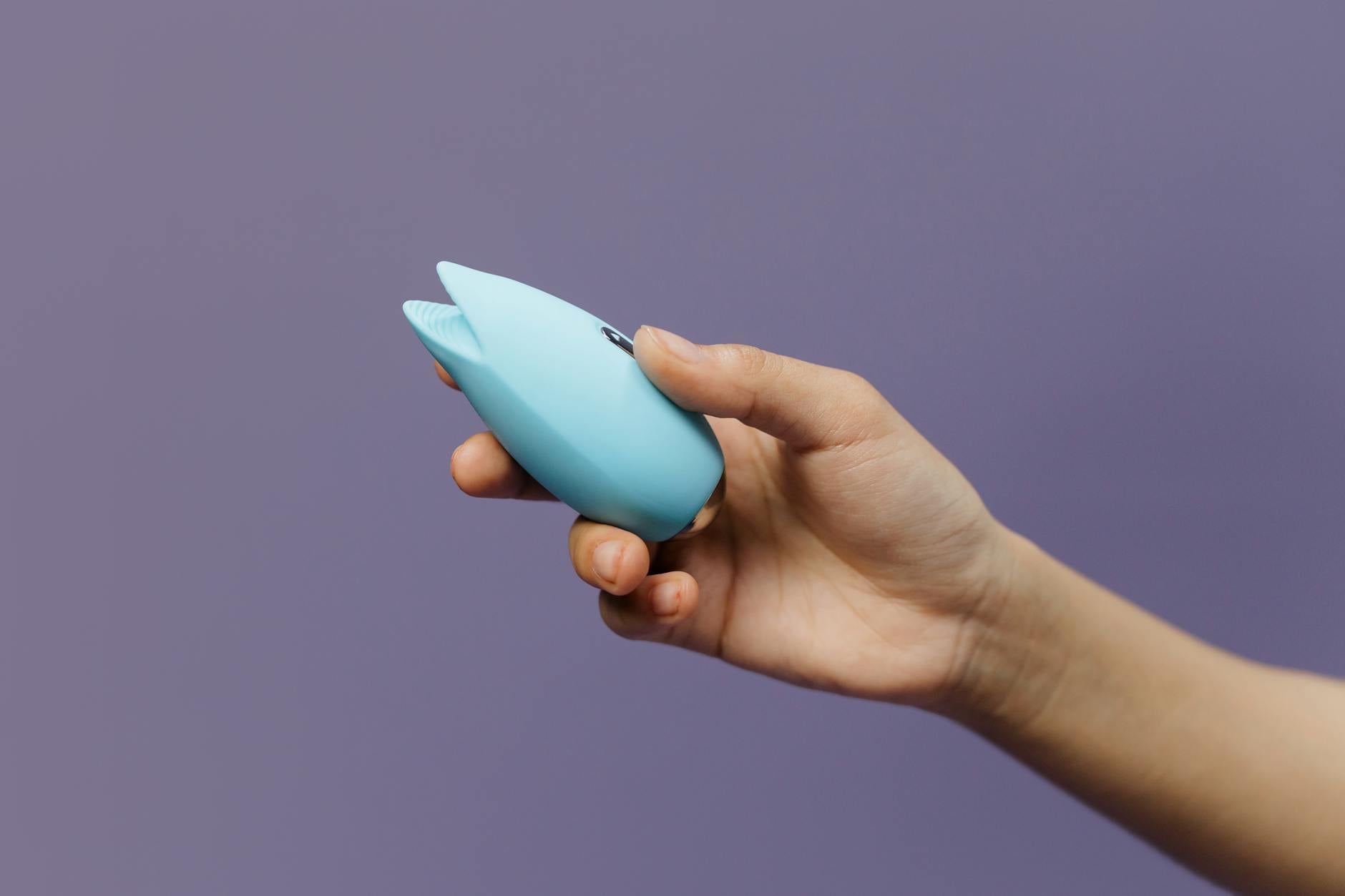
How to Use a Lemon Vibrator When Sex Feels Obligatory Not Pleasurable
When intimacy becomes a box to check instead of something you want, here's how to untangle obligation from desire and rebuild pleasure on your own terms.
Sex stopped being fun somewhere. Now it feels like laundry, like something you're supposed to do, like a performance you've already rehearsed too many times. You're not asexual. You're not broken. You're burned out on obligation.
Most of the time, obligatory sex doesn't arrive suddenly. It creeps. You say yes when you mean maybe. You say yes because your partner wants it and you don't want conflict. You say yes because you feel guilty for not wanting it. You say yes because you've been in this relationship for years and that's what you do. You say yes, and yes, and yes until the word "yes" has completely lost meaning.
Then one day you realize you haven't actually wanted sex in months. Maybe longer. And now your body is sending a very clear signal: stop.
Here's what's happening neurologically. When you override your body's "no" repeatedly, your nervous system learns that your signals don't matter. Pleasure requires safety. Safety requires that your body trusts you to listen to it. When you've been overriding that for years, your body stops bothering to send the signal at all.
So obligation isn't a moral failing. It's a symptom that something in your relationship or your self-boundaries has broken.
This is where lemon clitoral vibrators change the equation.
When you use a lemon vibrator alone, without an audience, without someone else's timeline, without anyone else's pleasure in the equation, you're teaching your nervous system something radical: your desire matters. Your pleasure is worth protecting. Your body's signals are real and important.
A lemon clitoral vibrator is particularly effective for this because the suction technology means you're not doing repetitive manual work. You can focus entirely on sensation and what actually feels good instead of focusing on "am I doing this right" or "is this taking too long."
Start without any pressure to orgasm. That's not the point right now. The point is reconnecting with the sensation of pleasure as something you choose, something you deserve, something that's just for you.
Three things happen when you start having solo pleasure again:
1. Your nervous system recalibrates. When you experience pleasure on your terms, your brain starts encoding pleasure as something that's associated with choice, not obligation. That's not a small thing. That's the difference between pleasure being safe and pleasure being dangerous.
2. You remember what you actually like. After years of obligatory sex, many people have genuinely lost touch with what turns them on. Solo exploration with a lemon vibrator is how you find that map again. Pay attention to rhythm, intensity, timing, fantasy, context. None of this information is wasted. It becomes the foundation for how you communicate with a partner later.
3. You get clearer about what needs to change. Sometimes, when you start having pleasure again, you realize the relationship itself is the problem. Sometimes you realize you've just needed permission to be selfish about your body. Both are valuable information. Neither one means you failed.
Okay so how do you actually do this when obligation is the baseline:
Schedule it. This sounds like it removes spontaneity, but honestly, spontaneity left when obligation arrived. Scheduling means you're taking your pleasure seriously. It means you're saying "this time is non-negotiable, it's for me, it's protected." Friday night, Tuesday morning, whenever. The calendar slot matters more than the time.
Set a boundary with your partner. Not a fight. Not a dramatic conversation. A simple one: "I'm taking some time for myself. I need this to feel good in my body." You don't need to explain what it is. You don't owe details. The boundary is the point.
Start with lemon vibrator patterns 1 and 2. Don't jump to intensity. Let your nervous system reset slowly. Spend 15 minutes just feeling sensation. If you orgasm, great. If you don't, that's also great. The goal is pleasure, not performance.
Track what shifts. After two weeks of solo time with a lemon clitoral vibrator, check in with yourself. Are you thinking about sex differently? Is your body less tense? Are you touching yourself more, outside of scheduled time? These are the signals that your system is recalibrating.
Here's the paradox: the way to potentially repair partnered sex is usually to step back from it entirely for a while.
Once your nervous system knows that pleasure is safe again, once you've rebuilt the map of what you actually want, you can start approaching your partner from a totally different place. Not from obligation. Not from guilt. From an actual choice.
That conversation looks like: "I need us to rebuild this. That means I need you to know that I might say no sometimes, and that's not rejection, that's protection. And when I say yes, I want it to be real." When you're rebuilding desire after hormonal changes, this conversation becomes even more critical because the hormonal piece is real too.
If your partner is someone who can hold that, who can slow down and rebuild with you, then you have something to work with. If they can't, that's information too.
Sometimes, reclaiming your pleasure means realizing your relationship isn't built on actual desire anymore. It's built on habit, or convenience, or fear of being alone.
I'm not here to tell you to leave anyone. But I am here to tell you that your pleasure matters. Your body's signals matter. If obligatory sex has been happening for years, it usually means something fundamental has shifted in the relationship, and shame about that isn't going to fix it.
A lemon vibrator can't fix a relationship. But it can help you remember that you deserve pleasure, that your body is yours, and that you get to decide what happens to it.
It varies, but most people start noticing a shift in 4 to 6 weeks of consistent solo exploration. Some people feel it within days. The timeline depends on how long obligation was happening and how much shame got tangled up with it. If you've been having obligatory sex for years, be gentle with yourself. Recalibration takes time.
Yes, absolutely. When you reconnect with pleasure on your own terms, your nervous system learns that pleasure is safe. That makes it safer to experience pleasure with someone else. It also gives you real data about what you like, which becomes the foundation for better communication with a partner.
That's a conversation worth having directly. Some partners worry that a vibrator means their partner isn't satisfied with them. That's their insecurity to work through, not your job to manage. You can say: "This is about me reconnecting with my body and my pleasure. It's not about you." If they can't accept that, you might need outside support or to reconsider whether the relationship supports your pleasure.
Completely normal, especially if you've spent years prioritizing your partner's pleasure or comfort. But guilt is a signal that you've absorbed the idea that your needs aren't important. They are. Your pleasure matters as much as anyone else's. Solo time with a lemon vibrator is not selfish. It's necessary.
Obligatory sex is a symptom, not a diagnosis. It can mean the relationship needs to shift. It can also mean you need to rebuild your boundaries and reclaim your voice. The way to know the difference is to start having solo pleasure again, get clearer on what you actually want, and see if your partner is willing to rebuild with you. If they are and you want to, you can repair it. If they're not, that's your answer.
A lemon vibrator can help you experience pleasure even when desire is low, which is valuable. But if medication is the issue, you might also want to talk to your doctor about whether adjustments are possible. Some medications are notorious for tanking libido, and sometimes there's an alternative that works better for your body. The vibrator is part of the solution, not the whole solution.
Obligatory sex won't fix itself by talking about it endlessly or by trying harder to perform pleasure you don't feel. It fixes itself when you step back, remember that your pleasure matters, and start rebuilding your relationship with desire on your own terms.
A lemon clitoral vibrator is just a tool. But it's a tool that sends a very clear message to your nervous system: I'm choosing this for me. I deserve this. My pleasure is not negotiable.