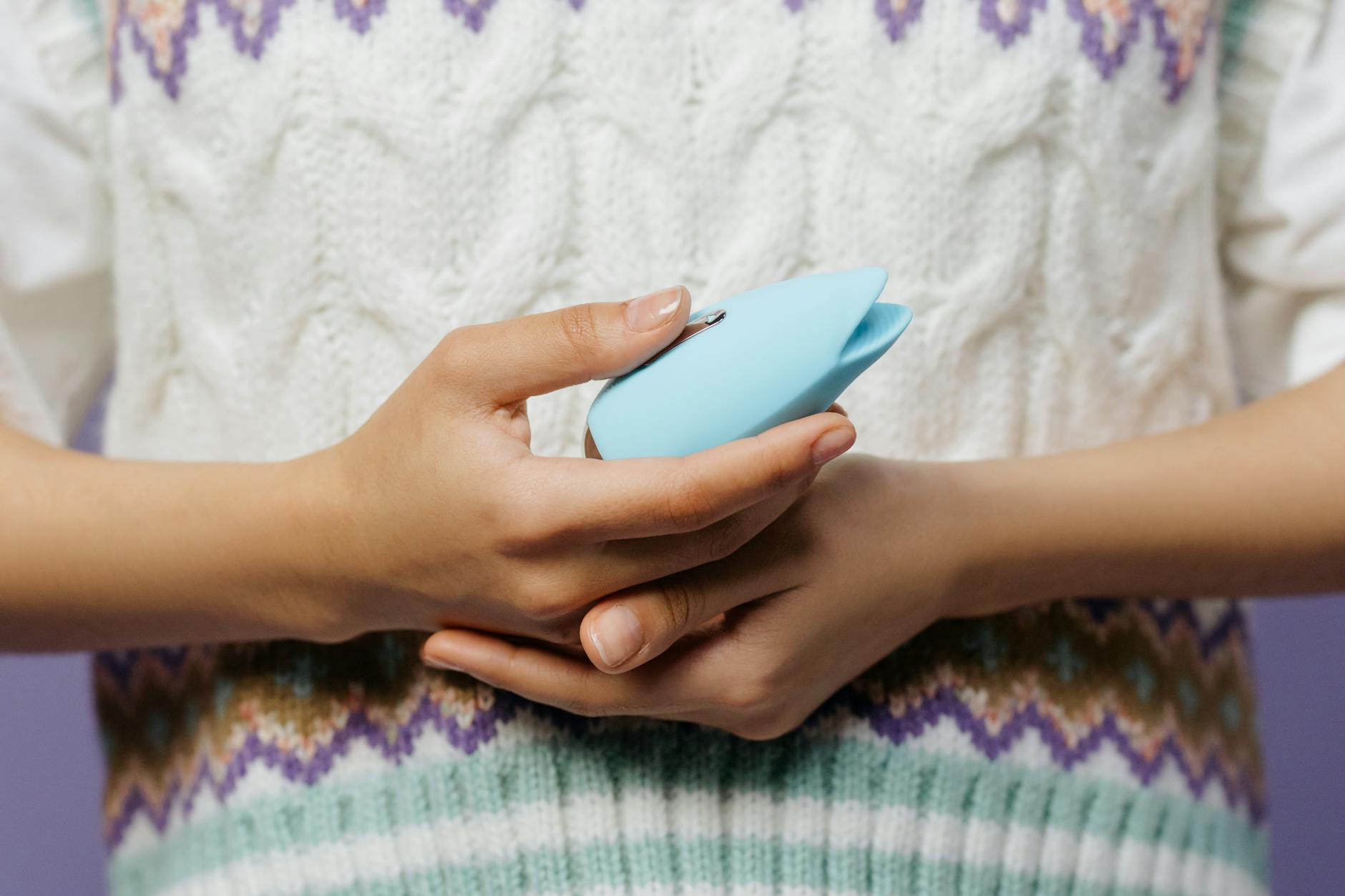
Here's the thing about anxiety and pleasure
Anxiety doesn't just kill the mood. It physically rewires how your body responds to touch. When your nervous system is in fight-or-flight mode, your brain deprioritizes pleasure signals and sharpens threat detection instead. That's not a character flaw. That's your amygdala doing exactly what it evolved to do. Solo play during anxiety should feel different because your whole system is different.
Most vibrators make this worse, not better. The rapid vibration patterns that work on a calm nervous system actually trigger more hypervigilance in an anxious one. It's like your brain is reading the stimulation as "something unexpected is happening to your body" instead of "pleasure is happening." Enter lemon vibrators. Air-suction lemon sexual toys like the Lem work on an entirely different mechanism, and that difference matters profoundly when anxiety is in the room.
Why traditional vibrators feel wrong when you're anxious
Most vibrators use rapid mechanical oscillation, typically 50 to 3000 vibrations per minute depending on the toy. That frequency pattern triggers something called the "startle response" in people with anxiety. Even if you don't consciously feel startled, your nervous system notices the unpredictability of the vibration and stays partially in threat-detection mode.
Add friction into that mix, and you've got a compounding problem. Friction creates a sensation your skin has to continuously interpret and adjust to. For an anxious nervous system, that's mental overhead. Your brain is working double-time to process what's happening physically while simultaneously trying not to panic. Pleasure becomes a background whisper under a much louder noise of internal vigilance.
You end up working harder to come, or not coming at all. And then you feel broken. You're not. The toy design just doesn't align with how your nervous system functions under stress.
How lemon clitoral vibrators work differently
Lemon vibrators use air-suction technology rather than vibration. This means the stimulation is a gentle, rhythmic pulse of pressure and release, not a buzzing frequency. The sensation reads to your nervous system as "this is something I understand and can predict," which immediately lowers threat-detection mode.
Second, there's no friction involved. Air-suction lemon adult toys create a seal and pulse around the clitoris rather than rubbing against it. For an anxious person, friction can feel like your body is being "worked on." Suction feels more like your body is being held and stimulated simultaneously. That distinction changes everything about how safe your nervous system feels.
Third, you can start incredibly gently. Most people with anxiety benefit from taking 15-20 minutes just to warm up their arousal. With the Lem vibrator, you can set the pattern to the softest pulse, barely above a whisper, and just let your nervous system slowly realize that pleasure is actually safe right now. You're not forcing anything. You're inviting.
The neuroscience of predictable stimulation
When your nervous system is anxious, unpredictability registers as danger. Your brain wants to anticipate what's coming next so it can either relax or prepare. Vibration patterns are inherently unpredictable in micro ways your conscious mind doesn't detect but your amygdala absolutely does.
Air-suction patterns, by contrast, follow a rhythm. You can feel the pulse building, plateauing, and releasing. It's the same rhythm every time. Your nervous system recognizes the pattern, categorizes it as "safe," and starts to downregulate from its threat state. This is called "vagal tone regulation," and it's the foundation of pleasure for anxious people.
Research on interoception (your ability to sense your own body's states) shows that anxious people often have hyperactive threat-detection systems but lower awareness of neutral or pleasant sensations. A lemon sucker tool like the Lem works because it provides a sensation that's strong enough to register clearly but predictable enough that your amygdala doesn't interpret it as a threat. Your brain goes from "what is that?" to "I like that," rather than cycling between the two.
Pacing and permission with solo play
When you're using a lemon clitoral vibrator during anxiety, the most important thing you can do is give yourself permission to go slowly. Many people with anxiety have internalized the message that they should be able to "just relax and enjoy it." That shame creates a feedback loop where anxiety worsens because you're now anxious about being anxious.
Instead, approach your Lem vibrator like you're getting to know a new sensation. Spend your first session just holding it, feeling the different patterns at the lowest setting, maybe without any genital contact. Your nervous system needs time to learn that this tool is safe. Once you've done that groundwork, solo play becomes something you're curious about rather than something you're performing.
The rhythmic, predictable nature of air-suction lemon vibrators also means you don't have to chase a specific outcome. Traditional vibrators often feel like you're on a mission to reach orgasm before the toy stops working or your attention fractures. The Lem's consistent pulse means you can stay in a state of pleasure without urgency. That absence of urgency is often the single biggest difference for people with anxiety.
When to layer in other support
A lemon vibrator is a tool, not a cure. If your anxiety is severe enough that you can't relax even with a gentle, predictable stimulus, that's important information. You might benefit from grounding techniques before solo play. Try the 5-4-3-2-1 method: name five things you see, four you can touch, three you hear, two you smell, one you taste. It reorients your nervous system toward present-moment safety.
Breathing matters too. Anxiety tightens breathing patterns. Before using your Lem vibrator, spend two minutes on intentional breathing. Breathe in for four counts, hold for four, exhale for six. That extended exhale activates your parasympathetic nervous system, which is the biological opposite of anxiety.
If anxiety around sexuality runs deep, talking to a therapist who specializes in sex and anxiety is worth considering. I'm biased toward evidence-based approaches like Cognitive Behavioral Therapy or Somatic Experiencing. They're not quick fixes, but they genuinely rewire how your nervous system responds to pleasure over time.
Building a routine that actually sticks
Here's what I recommend: set a specific time for solo play, the same time each week. Your nervous system loves routine. Predictability is the antidote to anxiety. Maybe it's Sunday morning with coffee, or Wednesday evening after work. The when matters less than the consistency.
Create a small ritual. Light a candle. Put your phone in another room. Tell your nervous system that this is a space where pleasure is allowed. Some people find that a few minutes of journaling beforehand helps. Just stream-of-consciousness thoughts about what you want, what you're nervous about, what you're grateful for.
Then use your lemon clitoral vibrator at whatever pace feels right. If you orgasm, great. If you don't, that's fine too. The goal isn't the outcome. The goal is proving to your nervous system that pleasure is safe and worth your time. Over weeks and months, that consistency rewires your baseline anxiety response.
FAQ: Lemon Vibrators and Anxiety
Can a lemon vibrator make anxiety worse?
If you start too intensely or with too much pressure to achieve something, yes, it can amplify anxiety. The solution is to go slower and lower. Start with the Lem on pattern one at the lowest setting, no genital contact, just exploration. Let your nervous system acclimate. If you find yourself feeling more dysregulated after solo play, take a break and consider working with a therapist who understands sex and anxiety together.
How long does it take before a lemon clitoral vibrator feels easier?
Most people report feeling a noticeable shift within three to four sessions using air-suction toys consistently. Your nervous system needs time to learn that this stimulus is safe and predictable. Don't expect an immediate transformation. Week one might feel awkward. Week two often feels more curious. By week three or four, many people report that the Lem vibrator feels genuinely easier to use.
Why does traditional vibration feel triggering when air-suction doesn't?
It comes down to predictability and friction. Vibration is inherently unpredictable in micro ways your amygdala detects. Air-suction follows a rhythm your nervous system can anticipate. There's also no friction, which reduces the sensory load your brain has to process. Together, these factors mean your threat-detection system stays quieter.
Is there a best time of day for solo play when you have anxiety?
Generally, earlier in the day or early evening works better than late night for anxious people. Your cortisol is naturally lower in the evening but your nervous system is also more wound up from the day's events. Mid-morning or early afternoon often hits a sweet spot. Avoid using your Lem vibrator right before bed if anxiety keeps you awake, as the stimulation can create an alertness that interferes with sleep.
Can I use a lemon vibrator if I'm on anxiety medication?
Yes, absolutely. Most anti-anxiety medications actually support better pleasure once they stabilize your baseline nervous system function. Some medications do affect sexual response (SSRIs, for example, can dampen sensation), but that's a conversation with your doctor, not a reason to avoid solo play. Using a tool like the Lem vibrator can actually help you notice whether medication changes are affecting your arousal.
What if I still can't relax with a lemon vibrator?
If anxiety is severe enough that even gentle, predictable stimulation feels difficult, you might need additional support. Therapy, particularly approaches that work with the nervous system directly like somatic therapy, can be really valuable. Solo play is one tool in a larger toolkit. Sometimes the most helpful thing isn't a new toy. It's working with a professional to help your nervous system feel fundamentally safer.
Your nervous system deserves this
Anxiety is not a personal failing. It's a nervous system doing its job, sometimes a little too well. The good news is that your nervous system can learn. It can learn that predictable, gentle stimulation is safe. It can learn that pleasure is possible even when anxiety is present. It can learn that you deserve to feel good.
A lemon vibrator won't cure anxiety. But the right tool, used patiently and consistently, can start to shift how your nervous system responds to pleasure. That shift is profound. It's not just about orgasms or physical sensation. It's about reclaiming a part of yourself that anxiety has been guarding too fiercely.
Start small. Go slow. Let your body learn that it's safe. That's where the real change begins.
If you're interested in exploring how other people use Hello Nancy's lemon adult toys for anxiety and stress, check out our broader guide on <a href="/en/blog/how-lemon-vibrators-improve-pleasure-after-taking-antidepressants">how lemon vibrators improve pleasure after taking antidepressants</a>. You might also find it helpful to read about <a href="/en/blog/why-lemon-vibrators-take-longer-to-work-during-stress-and-anxiety">why lemon vibrators take longer to work during stress and anxiety</a>, which explores the longer-term nervous system patterns at play.
For questions about how to use lemon vibrators safely, reach out to our team at <a href="/contact">contact us</a>. We're here to support your journey.