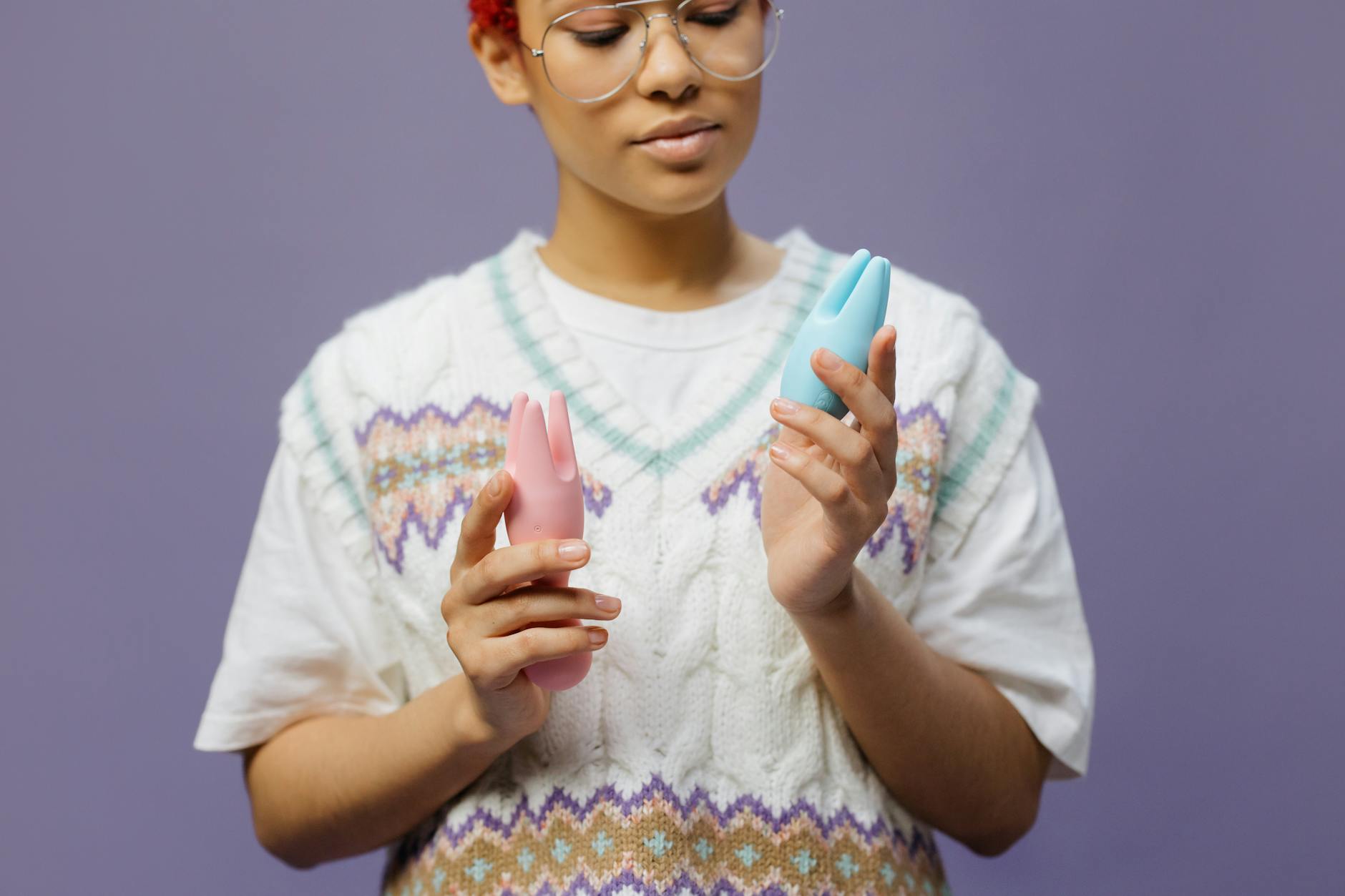
Lemon Vibrator for Couples: What Partners Should Know Before Trying
Here's what I hear most often in my therapy room when couples finally talk about vibrators: "I wanted to suggest it but I was worried they'd think I wasn't satisfied" or "I didn't know if it meant they weren't attracted to me anymore." These conversations usually happen years after one partner has been silently wishing they could talk about it.
The real issue isn't the vibrator. It's that somewhere along the way, we decided that wanting more pleasure together is the same as wanting less of each other. It's not. In fact, the couples who introduce a lemon clitoral vibrator into their sex life often report that it becomes a conversation starter rather than a substitute for intimacy. When handled right.
Why couples avoid the conversation
Let me be direct: most people don't bring up vibrators because they're afraid of what it means. "Will my partner think I'm not enough?" "Does this mean they want someone else?" "Will it make sex feel clinical?"
These fears are legitimate and completely normal. They're also almost always a sign that you need to talk about something deeper than the vibrator itself. The vibrator is just the visible part.
When I work with couples, I ask this question: what would it mean about your relationship if your partner wanted to try a vibrator? Most people answer something like, "That they don't love me" or "That I'm not enough." But think about that logic. If your partner said, "I'd love to try a new restaurant together," you wouldn't translate that to "They don't like my cooking." You'd just try the restaurant.
The difference is that sex carries so much more emotional weight. We're taught that "good" sex should be automatic, spontaneous, and need absolutely nothing except each other. That's not how bodies work. That's not how desire works. That's a myth that costs people a lot of pleasure and connection.
The three things to talk about before you buy one
If you're thinking about suggesting a lemon clitoral vibrator to your partner, or you're on the receiving end of that suggestion, here's what actually needs to happen in conversation first.
1. Separate logistics from feelings. A vibrator is a tool. Using one doesn't mean anything about your relationship unless you decide it does. When I work with couples, I explicitly say: "A lemon vibrator means you both want to try something that feels good. That's it." No hidden meanings, no subtext. You're not buying one because the relationship is broken or because someone is unsatisfied with their partner. You're buying one because pleasure is worth exploring, and you want to explore it together.
2. Check in about pressure and expectations. This is huge. Does the person who wants to try a vibrator expect it to "fix" something about your sex life? Are they expecting immediate results, or are they interested in exploring? On the flip side, is the partner who's hesitant feeling pressured to want this, or do they have genuine concerns? Get specific. "I think we could have more fun together" is different from "I'm not satisfied." Both are okay to say, but they need saying clearly.
3. Talk about what you actually want from your sex life together. Here's the thing: if you can't have a normal conversation about adding a vibrator, you probably have a communication issue that goes deeper than toys. And that's what actually matters. The vibrator won't fix a relationship with poor communication. But a relationship where partners can talk honestly about what they want? That's where a vibrator becomes a fun addition, not a symbol of something broken.
How to actually introduce it without making it weird
Once you've had the conversation and you've both decided to try a lemon vibrator together, here's how to make the experience actually enjoyable instead of awkward.
Start outside the bedroom. I know this sounds strange, but hear me out. Shop for it together. Look at the lemon clitoral vibrator on the Hello Nancy site together. Talk about what you like about it. This removes the shame and makes it feel collaborative. You're not sneaking around or surprising anyone with a toy. You're making a decision as partners.
Keep the first time low-pressure. Don't make it the centerpiece of your entire night. Don't build it up so much that it becomes this huge performance. The first time you use it, you might just have it in the room while you have sex normally. You might try it for two minutes and then decide you want something else. That's completely fine. The goal isn't to have a transformative experience. The goal is to get comfortable with it and each other.
Let the person with the vulva drive. If you're introducing a lemon clitoral vibrator, the person using it should be the one who controls when it's on, at what intensity, and where. This is about pleasure and agency. Your partner holding the vibrator for you while you direct it gives you both involvement without anyone losing control. That balance matters.
Use lube. This is practical but also psychological. Using water-based lubricant signals that you're treating this seriously and thoughtfully. You're not rushing. You're setting up conditions for actual pleasure, which sets a tone of care.
When things feel off (and what to do about it)
Sometimes introducing a lemon vibrator into partnered sex doesn't feel good. Maybe it feels disconnected. Maybe one partner feels insecure. Maybe the timing is off, or the intensity is wrong, or it just doesn't work like either of you expected.
This is normal and it doesn't mean you've failed.
The couples who come out of this experience with stronger intimacy are the ones who can pause and talk. "This doesn't feel right to me. Can we talk about why?" If it's because someone feels replaced or ignored, that's a conversation about what they need. If it's because the physical sensation isn't working, that's a conversation about technique or intensity or timing.
I've worked with couples who stopped using vibrators with partners and went back to partnered sex without them. I've worked with couples who found a rhythm where the vibrator is part of almost every sexual experience. I've worked with couples who use it sometimes and sometimes don't. All of those are fine. What matters is that you got to choose together.
The actual emotional benefit (beyond the obvious)
Here's what I've noticed over years of working with couples: the act of introducing a lemon vibrator often matters more than using the vibrator itself. You've had to be honest. You've had to ask for what you want. You've had to listen to your partner's concerns or excitement. You've had to collaborate.
Those are the building blocks of real intimacy.
When couples can say "I'd like to try this together" and their partner responds with curiosity instead of defensiveness, something shifts. It tells you that you can ask for things. It tells you that your partner cares more about your pleasure than their own comfort. It tells you that this relationship is big enough to hold exploration.
That's what actually transforms sex. Not the vibrator. The conversation.

Photo by cottonbro studio on Pexels
Moving forward with your partner
If you're ready to have this conversation with your partner, start small. You don't have to buy anything yet. Just say, "I've been thinking about trying something together. Would you be open to talking about it?" If they say yes, keep talking. Be honest about what you want and why. Listen to what they want and their concerns.
Then decide together. Maybe that means buying a lemon clitoral vibrator. Maybe it means trying something else entirely. Maybe it means waiting until you both feel ready. The decision belongs to both of you, and that's exactly how it should be.
If you're feeling stuck on how to bring this up, or if you've tried and it didn't go well, talking to a couples therapist can help. This isn't because something is wrong with you. It's because bringing new things into a sexual relationship can trigger real feelings, and sometimes it helps to have someone to sort through them with.
FAQ: Couples and Lemon Vibrators
Should I use a lemon vibrator during penetrative sex with my partner?
Absolutely, if you both want to. A lemon clitoral vibrator can be used during partnered penetration in a lot of ways. You or your partner can hold it while you're together. The stimulation can happen internally and externally at the same time, which a lot of people find intensely pleasurable. Just make sure you're communicating about what feels good and you've got lube on hand. Start with lower intensity settings and work your way up if you want more.
What if my partner seems threatened by the idea of a vibrator?
That's usually not about the vibrator. It's about what they think it means about your relationship. Instead of defending the vibrator, ask what's coming up for them. "I'm hearing some hesitation. Can you tell me what you're worried about?" Often it's fear that you're not satisfied, or that the vibrator means you want someone else, or that it means they're not enough. Those are feelings that need to be heard and addressed directly. Once you've talked about that, the vibrator conversation becomes easier.
Can using a lemon vibrator together actually improve our sex life?
Yes, but not always in the way you might expect. It can improve physical sensation. But more often, the real improvement comes from the communication that happens around introducing it. You've had to talk about what you want. You've had to be vulnerable. You've had to listen to your partner. Those are the things that transform intimacy over time.
Is it weird if only one of us wants to use a vibrator?
Not at all. You don't both have to be equally enthusiastic about it. One partner might love using a lemon vibrator and the other might think it's fine but not essential. One partner might be excited and the other one is warming up to it. That's normal. The key is that both people feel like their preferences matter. If one person wants to use a vibrator and the other person is willing but not interested, that's a yes.
How do I suggest a lemon vibrator without making it seem like I'm not happy with our sex life?
Be explicit about what you actually mean. "I really enjoy our sex life. I was thinking about trying something that might feel good to explore together." Then listen. A lot of people assume that wanting more is the same as wanting different, or that wanting new is the same as wanting better. You can say clearly, "I'm suggesting this because I want us to have fun together, not because anything is wrong." Sometimes that needs to be said more than once before it sinks in.
What if we try it and it doesn't feel good?
Then you stop and you talk about it. Maybe the timing was off. Maybe the intensity wasn't right. Maybe it didn't feel as physically good as you expected. Maybe it brought up insecurity for one of you. All of that is useful information. You can adjust. You can try again. You can decide not to use a vibrator together and go back to other ways of having sex. Using a vibrator isn't a commitment. It's an experiment.
The truth is, couples who can talk about pleasure, communication, and consent tend to have better sex and better relationships overall. If introducing a lemon vibrator becomes the doorway to those conversations, then it's done its job. And if you want support navigating this with your partner, I'm always here. Reach out at /contact anytime.
Your pleasure matters. Your partner's pleasure matters. And the conversation between you both matters most of all.