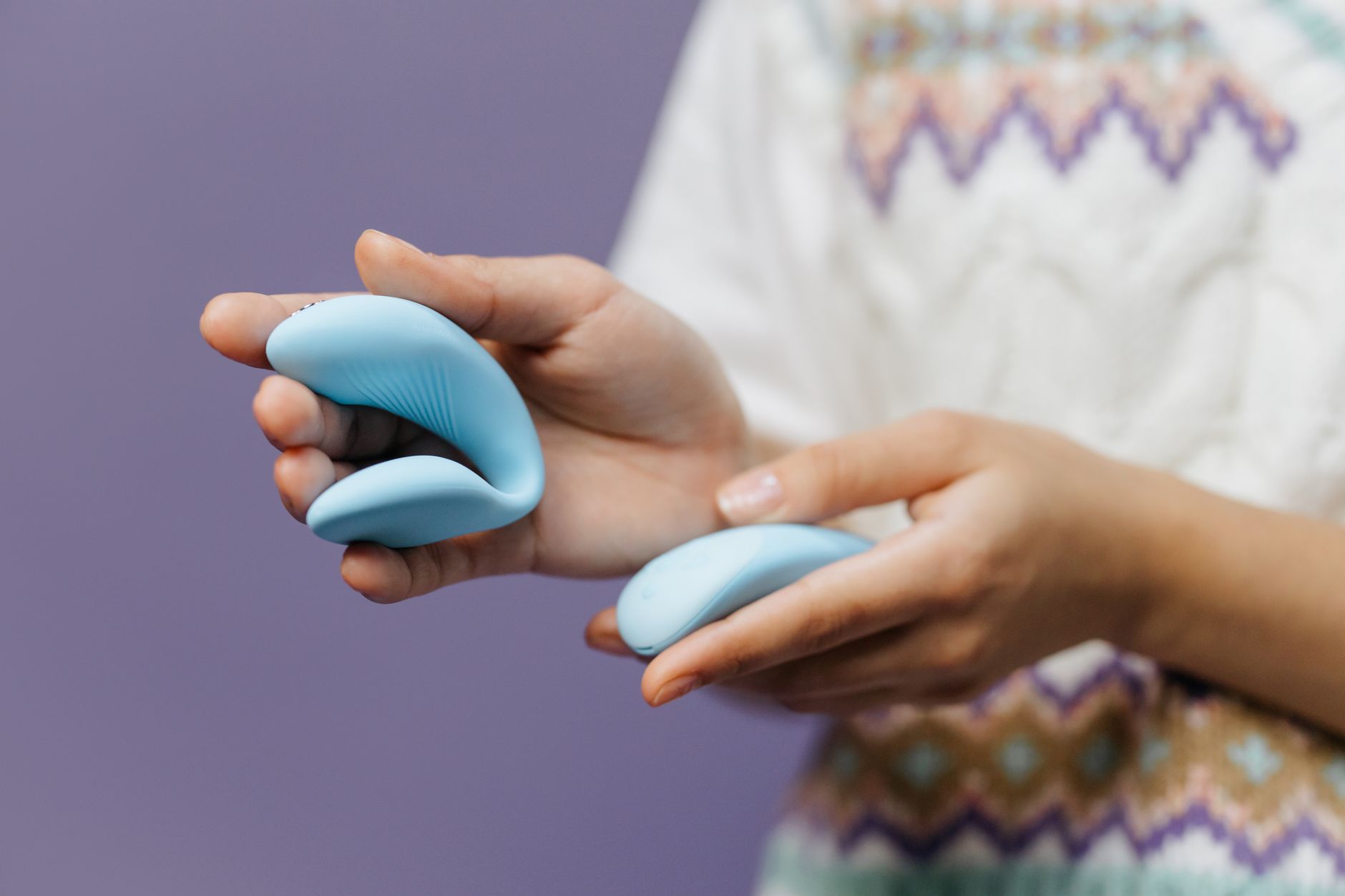
Let's start with the honest part
Your partner thinks introducing a lemon vibrator means you're not satisfied with them. Or they worry it's weird. Or they're just uncomfortable with the whole idea. None of these concerns are stupid, and none of them mean you can't move forward together. It means you need to frame this conversation differently than you have been.
Introducing a lemon clitoral vibrator isn't about fixing anything. It's about expanding what you already do. The difference matters, and your partner needs to feel it.
Why partners get hesitant in the first place
Here's what I see most often in my practice. A partner says "I want to try a vibrator" and the other person hears "You're not good enough." That's not a rational conclusion. It's a story their nervous system tells them, built from years of cultural messaging about what sex is supposed to look like and what it means if it doesn't.
Men, in particular, often grow up with the idea that their body should be able to do everything alone. A partner bringing home a lemon vibrator can feel like a vote of no confidence, even though that's not what it is at all.
Women sometimes worry that wanting a vibrator means they're broken, or that introducing one means admitting their partner can't satisfy them. The shame goes both directions, it's just different shapes.
Both of these stories are wrong. But they're powerful, and you can't logic someone out of powerful stories. You have to replace them with a better one.
The reframe that actually works
Instead of: "I want to use a vibrator because I need more stimulation."
Try: "I want to explore something new with you. I've been thinking about lemon vibrators, and I think it could be fun for us together. I want to try it with you specifically, not alone."
This matters. You're not saying you need something external to feel good with them. You're saying you want to experience something together. It's collaborative, not compensatory.
Honestly? This isn't manipulation. It's accurate. Using a lemon vibrator with a partner is genuinely different from using one solo. The sensation changes. The intimacy changes. It's a shared experience, not a workaround.
How to bring it up without triggering a defensive reaction
Timing first. Don't bring this up during sex or right after, when emotions are still running high. Don't bring it up during conflict. Bring it up when you're both calm, fed, and have time to actually talk.
Location matters too. Not in bed. Sit down together with coffee or tea. Make it a conversation, not a pitch.
Opening line: "I've been thinking about something I'd like to try with you, and I want to talk about it first." This tells your partner it's not a surprise, and it's a discussion, not a decree.
Then give your partner space to react. They might say no immediately. They might need time to think. Both are fine. The goal here isn't to convince them by Friday. It's to start a conversation that can continue.
Naming the actual concerns
If your partner says, "But what about me? Won't you stop wanting to be with me?" Here's what you say:
"No. This isn't about replacing anything. It's about adding something. Lemon vibrators work really well on the clitoris because of how they feel, and I like the way it feels. That doesn't change how much I want to be with you. It changes what we do when we're together."
If they say, "It feels weird to me," that's code for "I'm uncomfortable." Don't dismiss it. Acknowledge it. "I get that. It feels new. We don't have to do anything today. But I'd love to show you how it works, just so you know what I'm talking about."
If they say, "That seems like it's for single people," correct this gently. "Tons of couples use lemon vibrators together. It's actually really common. It's become part of what people do."
If they say, "I don't want to watch you use a vibrator," ask them what they're worried about. Usually it's one of: "I'll feel left out," or "I don't know what to do while it's happening," or "I'm afraid it means you don't want me." Each of those has a different answer.
The gradual introduction
You don't have to use a lemon vibrator during partnered sex the first time. You could show your partner you use it alone, and let them watch if they want to. This removes some of the performance pressure and lets them see it's just a tool, not a rejection of them.
Or, during partnered sex, use it on yourself while they're inside you or touching you elsewhere. This keeps them involved and shows them it's an addition, not a replacement.
Or, use it during foreplay before anything else happens, and then set it aside. This frames it as part of the warm-up, not the main event.
None of these approaches is right. The right one is the one that feels manageable for both of you.
What to actually do when they're ready
If your partner agrees to try, keep the first time low-pressure. Don't make it a Big Moment. Just say, "Want to try this?" and then use it. See what happens.
If your partner wants to be involved, they might hold the lemon vibrator, or control the settings, or just watch and touch you elsewhere. Let them figure out what feels right.
If they're nervous, start with a lower setting. The lem vibrator has multiple intensity levels for exactly this reason. Explore the gentler patterns first, before moving to the stronger ones.
If your partner enjoys it, great. If they're indifferent, that's okay too. The goal isn't to convert them into a vibrator enthusiast. The goal is to give them a chance to be part of something you're interested in, and to show them it doesn't mean what they thought it meant.
The conversation you might need to have after
Some partners try it once and never mention it again. Some partners get curious and want to experiment more. Some partners surprise you and become enthusiastic.
If your partner seems closed off after trying it, give them space, but also check in. "That felt weird to me. Can I ask what was on your mind?" Listen to what they say without defending yourself. Sometimes they need a few days to process.
If they're open, ask what felt good and what didn't. Did the vibration feel intense? Did it feel strange to have something in between you? Did they like watching? Ask specific questions so you know how to move forward.
If they loved it, you're in good territory. You can start thinking about when and how often you want to use a lemon vibrator together, and whether you want to explore other things.
What doesn't work
Don't surprise your partner with a vibrator in the bedroom. Don't insist they try it if they say no. Don't compare them to anyone else or suggest that partnered vibrators are what "everyone" is doing now, like they're behind on some intimacy schedule.
Don't use a lemon vibrator as a way to avoid dealing with actual intimacy problems. If you and your partner have stopped connecting emotionally, or if sex has become mechanical, a new toy isn't the solution. It's a detail. The real work is elsewhere.
Don't make this about proving your partner isn't enough. Make it about exploring together.
The long view
Introducing a lemon clitoral vibrator to a hesitant partner isn't a single conversation. It's a series of small conversations, spread out over weeks or months. You're gradually shifting their understanding from "this is weird and means something bad" to "this is just a tool we use together."
Some partners never get fully comfortable with vibrators, and that's information. You get to decide what that means for you. But most partners, given time and no pressure, come around. They realize it's not a threat. They realize it actually makes sex more fun.
Your job is to make that realization possible, not to force it.
People also ask
What if my partner refuses to even discuss using a lemon vibrator?
Then you have a conversation about boundaries and preferences, not about vibrators specifically. They might need to understand why this matters to you, and you might need to understand why it feels threatening to them. If you're unable to find middle ground after a genuine conversation, you might want to work with a couples therapist. This is usually about something bigger than the vibrator itself.
Can I use a lemon vibrator alone if my partner doesn't want to be involved?
Absolutely. Your pleasure is yours. If your partner isn't interested in using lemon clitoral vibrators together, you can still explore them solo. You might do this openly (they know and accept it), or privately (they don't need to know). Either is fine. Some people separate partnered sex from solo exploration, and that's a reasonable boundary.
How do I know if my partner is actually okay with it or just going along with it?
Watch their body language. Do they seem relaxed or tense? Are they asking questions and offering feedback, or are they silent and checking their phone? After, ask them directly. "Did that feel good to you? Would you want to do this again?" People are usually honest when you ask directly, without judgment.
What if my partner wants to use the lemon vibrator alone on themselves?
Wonderful. Reciprocal curiosity is a good sign. You might discover you both enjoy different patterns or intensities. You might use it together sometimes and separately other times. This is actually the ideal outcome because it removes the "this is for you" dynamic and makes it "we both like this."
Is it normal for partners to feel threatened by vibrators?
Very normal. Vibrators have been coded as solo toys for so long that bringing them into partnered sex can feel like a betrayal of what "real" intimacy is supposed to look like. That's changing, but slowly. Your partner isn't being irrational. They're responding to deep cultural messaging. Patience helps.
How do I bring up wanting to try lemon vibrators without sounding like I'm criticizing my partner?
Frame it as curiosity, not complaint. "I've been interested in trying something new" is different from "I'm not satisfied with what we're doing." You might also share where you got the idea. "I read about how these work, and I thought it sounded interesting to try together." This positions it as exploration, not judgment.
Next steps
If your partner is genuinely hesitant, the best thing you can do is give them information without pressure. Let them know you're interested in lemon vibrators, and that you'd love to explore together if they're willing. Then let them sit with that. Sometimes people need time to get comfortable with an idea before they're ready to try it. That's not resistance. That's normal.
If you're ready to have this conversation, start small. Pick a quiet moment. Use the framing that positions this as something you want to explore together, not something you need from them. Listen to their concerns without getting defensive. And remember that moving toward shared pleasure is a process, not a single moment.
If you need more support navigating this conversation, reach out at /contact. I'm here to help couples build intimacy, one conversation at a time.