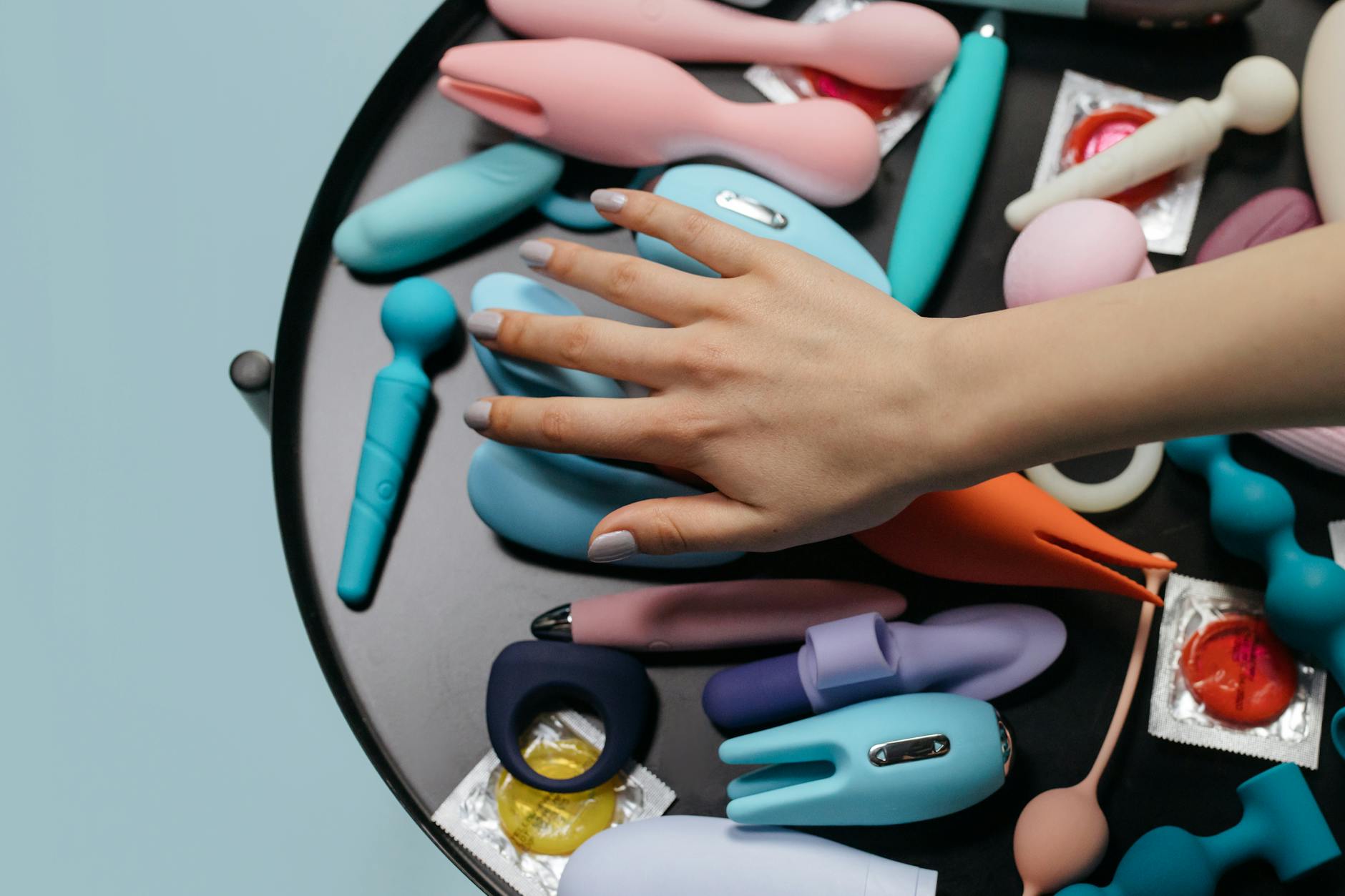
Here's what no one tells you about stress and desire
When your life implodes—job loss, medical crisis, family emergency, relocation—sex doesn't just take a back seat. It evaporates. And not because you stopped loving your partner. The brain literally can't produce the neurochemistry for arousal while it's running a constant threat-detection loop.
But here's the part therapists see over and over: that loss of desire, if it stretches long enough, starts to feel like the new normal. Couples wake up one day and realize they haven't touched each other in months, and the thought of starting again feels almost impossible. Not because the desire is broken. Because the friction—the vulnerability, the potential rejection, the pressure to perform when you're already running on empty—feels like too much.
A lemon vibrator changes the equation because it shifts the focus away from performance and back onto sensation. That matters more after stress than at almost any other time.
Why stress kills desire in the first place
Let me be clinical for a moment: chronic stress floods your system with cortisol. High cortisol suppresses oxytocin (the bonding hormone) and testosterone (the desire hormone). Your nervous system is stuck in fight-or-flight, which means arousal—a parasympathetic response—literally can't happen. Your body is too busy being defensive.
On top of that, you're exhausted. And exhaustion doesn't just mean you're tired. It means your emotional bandwidth is gone. Sex requires vulnerability. When you're depleted, vulnerability feels dangerous.
Then there's the guilt layer. One of you probably wants sex before the other does. That person starts feeling rejected. The other person starts feeling pressured. And suddenly sex isn't connection anymore—it's a source of conflict.
Why lemon vibrators work better than "just trying harder"
Here's what a lemon vibrator does that a conversation or a date night sometimes can't:
It removes the performance equation. With a partner alone, there's an unconscious pressure to "be sexy" or "be responsive." When you introduce a lemon clitoral vibrator, the focus shifts entirely. You're not performing for anyone. You're feeling something that isn't dependent on your emotional state or your partner's timing or whether you've been awake for fourteen hours.
It also shortens the ramp-up time. After stress, arousal takes forever to build. You can spend thirty minutes working up to anything and still feel nothing. A lemon vibrator—the suction sensation specifically—activates nerves in a way that bypasses some of that sluggishness. You feel something, faster, which gives your brain permission to shift out of threat-mode.
And maybe most importantly: it signals intention. When a couple brings a toy into bed, they're saying, "This matters enough to plan for. This matters enough to be intentional about." That's huge after months of neglect.
How to actually introduce it without making things weird
Timing matters. Don't bring it up during a fight or when you're both stressed. Choose a moment when you're both relatively calm.
Bring it up outside the bedroom. Honestly, I'd suggest mentioning it somewhere neutral—the kitchen, a walk—rather than in bed. This keeps it from feeling like a crisis intervention. "I was reading about how couples reconnect after stress, and I found something I think could help us both relax. Want to try it together?" Simple. No pressure. No implication that anything is wrong with your partner.
Show, don't tell. Have the lemon vibrator visible. Let your partner see it's small, not intimidating. The design of a quality lemon clitoral vibrator like the one from Lemon Vibrator is intentional—it's elegant, not medical. Seeing the actual object usually dissolves half the anxiety.
Offer agency. "We could try this together, or you could try it alone first if that feels better." Some people want to explore solo before bringing a partner in. That's fine. It's still intimacy work.
What the first session actually looks like
Start with clothes on, honestly. No pressure to undress or "get in the mood." Just sit together, maybe in bed, and show each other how it works. Press the button. Feel the vibration. Talk about what you notice. This sounds unsexy, but it defuses the weirdness and makes it mechanical information instead of charged territory.
Then, when you both feel ready, you can get naked. But the pressure is already lower because you've already done the awkward bit.
With a lemon vibrator specifically, the user—whether that's you or your partner—usually knows what feels good within a few tries. The suction sensation is different from traditional vibration, and a lot of people find it more intuitive. This means less fumbling and faster arrival at "oh, that's actually nice." Which matters when you're both nervous.
Let your partner control it. Don't use it on them if they're hesitant. Let them use it on themselves while you're there. This keeps the power in their hands and removes any feeling of being "done to."
The emotional work that has to happen alongside
Here's the uncomfortable truth: a lemon vibrator won't fix a relationship where there's deep resentment or betrayal. If the stress that killed your sex life also damaged trust—one partner checked out, there was infidelity, major communication breakdown—then a vibrator is a nice gesture, but it's not the main event. That's therapy territory.
But if the stress was external—a job loss, a sick parent, a financial crisis—and you both still want the relationship, then a vibrator is a practical tool for rebuilding. It's saying, "I want this part of us back, and I'm willing to work for it."
You'll also need to have the conversation about what caused the stress and what's changed. If the crisis is ongoing, some couples find it helpful to set a specific time for intimacy rather than waiting for spontaneous desire. "Friday nights, we reconnect" sounds unromantic, but it's actually protective. It removes the subconscious pressure that's been building.
What to expect in the weeks after
Desire doesn't typically flood back all at once. It returns in small surges. First time you use the lemon vibrator together, you might both feel relief and connection—but not necessarily explosive attraction. That's normal.
Over a few weeks, as you build this small ritual, the nervous system starts to recalibrate. Stress hormones lower. Bonding hormones rise. You start to feel safer with each other again. And then actual desire can emerge, because the threat-signal has finally quieted.
Some couples find that using the vibrator together becomes their main form of intimacy for a while, and that's okay. It's still connection. It still rebuilds the physical relationship. Eventually, for many couples, spontaneity returns. But even if it doesn't fully, that's not a failure. Intentional intimacy beats no intimacy every single time.
When to know if you need more support
If you've tried this a few times and one partner is still completely shut down, there's usually something else going on. Depression, unresolved resentment, or a sign that the relationship itself needs attention from a couples therapist. A lemon vibrator is a helpful tool for rebuilding intimacy, but it's not a replacement for the actual conversations and sometimes professional support that relationships need after sustained stress.
If the stress is still happening—if the crisis isn't resolved—it's also worth acknowledging that reconnecting physically while the underlying problem is still active is hard. You're not failing. You're just fighting against real circumstances.
The larger truth
After major life stress, couples who rebuild intimacy don't necessarily feel more attracted to each other. They feel more attuned. More forgiving. More willing to stay. And that's actually the foundation that sustainable desire grows from. A lemon vibrator helps you get there faster because it removes the shame and performance pressure and lets you both just feel something good together again.
People also ask
Can we use a lemon clitoral vibrator right after a major stressful event, or should we wait?
Wait at least a few days until the acute stress—the immediate panic or grief—has settled slightly. Your nervous system needs time to come down from crisis mode. But you don't have to wait until everything is perfect. Introducing a lem vibrator while you're still in the recovery phase is actually beneficial because it signals stability and intentionality to your brain. It's saying, "Things are hard, but we're still choosing each other." Just don't expect earth-moving connection right away.
What if only one of us wants to use the lemon vibrator?
That's common. Sometimes one partner is ready to reconnect and the other isn't. The key is not pushing. If your partner isn't interested, using it solo in front of them can actually be a softer entry point than joint use. When they see you enjoying it without pressure, anxiety often lowers. But respect their pace. Desire can't be forced, even with good tools.
How often should couples use a lemon vibrator together after stress?
There's no magic number, but starting with once a week gives you a rhythm without feeling obligatory. Some couples find that schedule helpful because it creates a dedicated time for intimacy when everything else is chaotic. Others prefer to keep it spontaneous. Listen to each other. The point is consistency, not frequency.
Is using a lemon sexual toy a sign our relationship is in trouble?
Not at all. Using toys—whether it's a lemon clitoral vibrator or anything else—is actually a sign that you're communicating and problem-solving together. Couples who use vibrators report higher satisfaction and more frequent intimacy, partly because they're more likely to talk about what feels good. Shame is the real problem. Tools are solutions.
My partner thinks a lemon vibrator means they're not enough. How do I address that?
This is the most common barrier, and it's worth addressing directly. The vibrator isn't replacing your partner—it's assisting connection. A good analogy: a massage chair doesn't mean you don't want your partner to touch you. It means you want more types of touch. After stress, the nervous system sometimes needs specific sensations to shift out of defensive mode. The vibrator is part of rebuilding intimacy together, not a substitute for it.
How do I know if a lemon vibrator will actually help us reconnect?
Honestly? If you're both asking this question, you're already halfway there. Couples who are curious and willing to try new things together after stress are the ones who successfully rebuild. The vibrator is just a tool. The real work is choosing each other repeatedly, even when it's hard. If both of you want that, almost any tool helps.