
Let's be real about the elephant in the room
You're thinking about introducing a lemon vibrator into sex with your partner, and your brain is already spinning through worst-case scenarios. What if they think it means they're not enough? What if it kills the mood? What if they say no?
Honestly though, the conversation is almost never as difficult as the silence before it.
Why partners actually appreciate the honesty
Here's what I've learned from two decades of working with couples: the moment you bring something into the room with genuine enthusiasm and zero shame, your partner relaxes. Not all of them, not immediately. But most. Because you've just signaled that sex matters enough to you to be vulnerable about what you want.
That's attractive. Even when the request surprises them.
A lemon clitoral vibrator isn't a replacement or a commentary on your partner's skills. It's a tool that does something a hand, mouth, or penis literally cannot do. It's air-suction stimulation, which works differently on the nervous system. Different isn't better or worse. It's just different. And different often feels incredible.
The conversation framework that actually works
Start with desire, not lack. Don't lead with "I'm not satisfied" or "We need to spice things up." Lead with curiosity. "I've been thinking about trying something new. Would you be open to exploring it together?"
That framing immediately signals that this is collaborative, not critical.
Name the specific thing. Don't be vague. Vagueness breeds anxiety. Say: "I'm interested in trying a lemon vibrator. It's a clitoral vibrator that uses suction rather than vibration, and I've read a lot of positive things about the experience."
You've just transformed it from "some mystery sex thing" to "a specific tool with a function I can explain."
Separate the conversation from the bedroom. Have this talk over coffee or on the couch, not when you're already intimate or headed toward sex. Your partner needs space to process without the pressure of the moment pushing them to say yes or no out of performance anxiety.
Invite questions. Ask what they're thinking. Listen for the real concern hiding under the first concern. If they say "I don't know," that's not a no. That's "I need more information." Offer it.
What partners actually worry about (and what to say)
"Does this mean I'm not good enough?" Answer: "No. This is about my own pleasure, not a rating of you. I'm interested in sensation that's different from what we already do. Same way you might enjoy both coffee and tea."
"Will you always need it?" Answer: "I don't know yet. But I'd like to find out. We can try it and see how it feels. There's no pressure to use it every time."
"Will it desensitize you?" Answer: "That's a real question. The honest answer is that clitoral sensitivity is complex. Some research suggests the opposite. And if we notice anything, we can adjust. But I'd rather find out together than never try."
"What if I don't like watching?" Answer: "That's fair information. We can explore what feels good for both of us. Maybe I use it and you focus on touch elsewhere. Maybe you use it on me. Maybe we find a positioning that works better for you."
Notice the pattern: you're not dismissing their concern. You're meeting it with honesty and collaboration.
The first time: positioning and rhythm
Once your partner has said yes, here's what actually happens in practice.
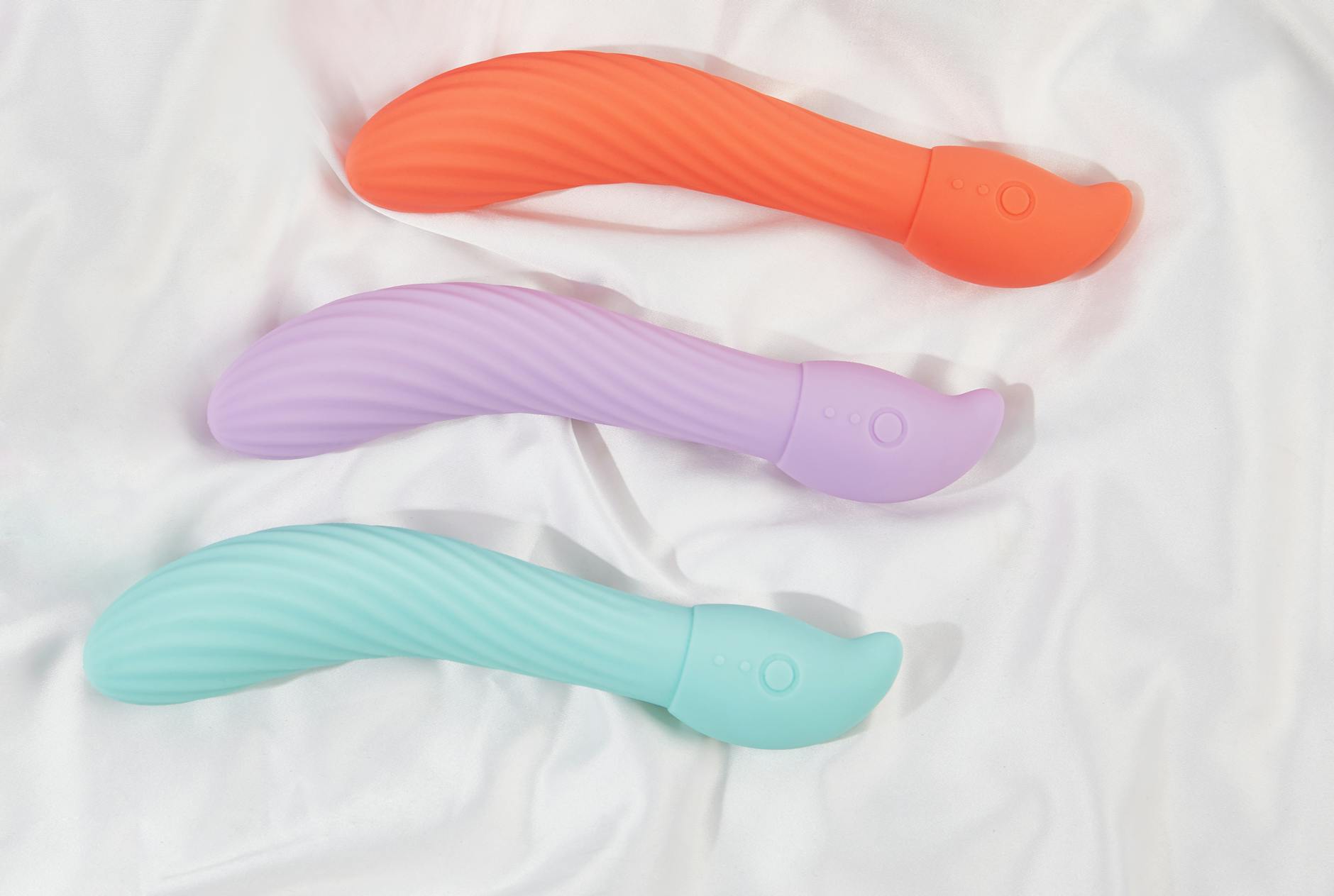
Photo by IFONNX Toys on Pexels
Start clothed or semi-clothed if that feels safer. There's no rule that says you have to be fully naked the first time. Some couples feel less vulnerable exploring new things when they're partially dressed. That's completely valid.
Let your partner watch what you do. If you've used a lemon vibrator solo before, show them. How you hold it, the patterns you like, where the sensation is strongest. This demystifies it fast. They can see it's functional, not theatrical.
Communicate the sensation in real time. "That feels really good" is better than silence. Your partner is reading your body anyway. Narrate what you're experiencing so they're not left guessing whether this is working or whether they should feel threatened.
Integrate it into foreplay, not as the main event. A lemon clitoral vibrator often works best as part of a sequence: touch, kissing, manual stimulation, then the vibrator. Your partner can do everything else while you control the vibrator. This isn't replacing them. It's adding a layer.
Position matters for comfort. If you're lying on your back, your partner might kneel beside you or between your legs and manually stimulate you while you use the vibrator. If you're on top, you control the angle and depth while using the tool. The point is that your partner remains present and involved, not sidelined.
When they're resistant (the harder conversation)
Some partners say no. Not "not right now." Not "I need to think about it." A flat no.
That's worth taking seriously. But before you accept it, ask why.
"I'm not comfortable with it" is worth understanding. Is it a values thing? A jealousy thing? A fear thing? A sensory thing? Each one has a different path forward.
If it's a values thing ("I think partnered sex should look a certain way"), you're in a deeper conversation about sexual compatibility. That might need a couples therapist.
If it's a jealousy thing, it's often about reassurance and time. Some partners warm to the idea once they see it's not replacing them.
If it's a fear thing ("I'm worried you'll prefer it to me"), that's insecurity, and it's fixable through conversation and patience.
If it's a sensory thing ("The sound/idea of it freaks me out"), respect that boundary. But also ask: is there a version that works? A quieter vibrator? Not watching? A different toy altogether?
The goal isn't to convince them to say yes. The goal is to understand what the no actually means.
Building lasting comfort over time
Introducing any new tool into partnered sex isn't a one-conversation situation. It's an ongoing negotiation.
After the first time, check in. Not in a way that puts pressure on the moment ("Did you like it?"), but naturally. "That felt different for me. What was your experience?" Listen. Adjust. Try again or don't.
Some partners grow more comfortable with time. Some don't. Both are fine. Your job is to keep communicating instead of making assumptions.
And here's something important: introducing a lemon vibrator into your partnered sex can actually deepen intimacy if you're both willing. Because you're creating space to talk about pleasure without shame. You're saying "my body matters, your comfort matters, and we're going to figure this out together." That's foundational.
People also ask
Can I use a lemon vibrator during penetrative sex with a partner?
Yes, though positioning matters. If you're being penetrated, using a clitoral vibrator at the same time adds sensation without replacing anything. Some couples find this intensifies orgasm. Others find it too much stimulation at once. The only way to know is to try and communicate about what feels good.
What if my partner wants to use the lemon vibrator on me but I'm worried about losing control?
That's a fair worry, and it's worth naming. Start with them holding it while you guide their hand or give directions. "A little higher," "slower," "right there." This keeps you in control while letting them participate. Over time, you might release control more, or you might not. That's your choice.
How do I bring this up without seeming like I'm bored with my partner?
Frame it as expansion, not replacement. "I want to explore more ways we can feel good together." That's honest and it's true. Introducing new sensations isn't about boredom. It's about curiosity and deeper intimacy.
Should I hide the vibrator when I'm not using it, or keep it visible?
That depends on your relationship dynamic and living situation. Some couples keep toys in the bedside drawer openly. Others prefer a storage box. The key is that it's not treated like contraband. A lemon vibrator is a tool, same as lube or condoms. It doesn't need to be hidden unless you're genuinely uncomfortable with visibility in your home.
What if we try it and my partner still doesn't like it?
Then you have information. The vibrator stays or goes based on what works for both of you. But here's the thing: the conversation you had, the vulnerability you shared, the fact that you both said yes to exploring something new together? That stays. That deepens the relationship, regardless of whether the actual tool becomes part of your regular rotation.
Can we use a lemon clitoral vibrator if my partner is jealous about toys?
Maybe. But the jealousy is the real issue, not the vibrator. A vibrator is a mirror that shows what's already there. If your partner feels threatened by a tool, that often means they're feeling insecure or disconnected. That's worth addressing together, possibly with a couples therapist. The vibrator can come later, once you've rebuilt that trust.
Introducing a lemon vibrator into partnered sex is less about the tool and more about the conversation. Once you've had the hard talk, the rest is just logistics. And logistics are fixable.