Your desire doesn't stay flat. And that's actually good news.
Let's be real. Your libido isn't supposed to be a steady hum 24/7. It peaks. It dips. It changes week to week in ways that feel almost like you're becoming a different person. That's not broken. That's just biology working exactly as it's supposed to.
Most sex advice pretends this doesn't happen. You get generic tips about "spontaneity" and "communication" that ignore the fact that your body is literally priming you for pleasure at specific times in your cycle. By the time ovulation rolls around, you're biologically wired to want more sex, more sensation, more intensity. Fighting that or ignoring it is like trying to sleep at noon when your body's screaming to move.
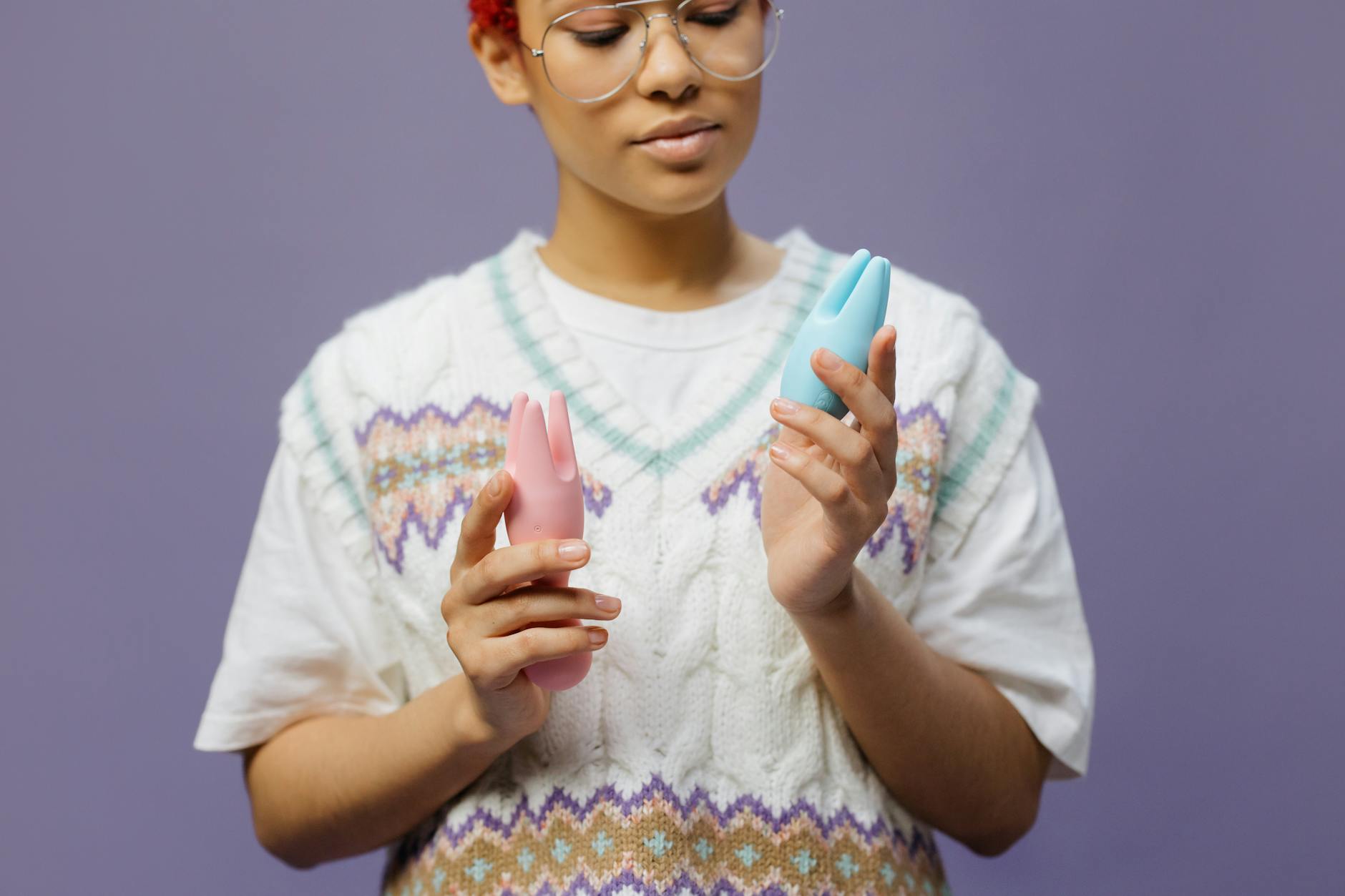
Here's what happens: when desire peaks mid-cycle, using the right tool at the right time transforms everything. A lemon vibrator, designed for sustained clitoral stimulation, works differently when your body is already primed. And knowing how to use it during your high-desire window is the difference between sex that feels okay and sex that feels like your body remembering what it's actually capable of.
What actually happens to desire across your cycle
Your cycle isn't four weeks of sameness. It's four distinct phases, and each one has a different neurochemical signature.
During menstruation, desire often tanks. Estrogen is at the bottom of the barrel. Your body is shedding tissue. Orgasms feel less intense, if they happen at all. This is not the phase to push. It's the phase to rest or use gentle, focused stimulation if you want it.
Follicular phase comes next. Estrogen starts climbing. Your energy goes up. Motivation goes up. Patience for foreplay gets shorter because your nervous system is more easily aroused. This is when a lemon clitoral vibrator starts to feel good, but you're still building toward peak.
Then ovulation hits, usually around day 14. Testosterone spikes too. This is when desire goes nuclear. Orgasms feel deeper and more accessible. Your body is quite literally broadcasting that it wants stimulation. This is the phase where intensity matters. Where a tool like a lemon vibrator that delivers sustained, pulsing suction feels like it was designed exactly for this moment.
Luteal phase is the long slope down. Progesterone rises. Sensitivity increases, which can feel good or overwhelming depending on what you're asking your body to do. Some people orgasm more easily in early luteal. By late luteal, you might want nothing to do with pleasure and everything to do with rest.
Why your lemon vibrator feels different at different times
A lemon sucker works by delivering gentle suction and micro-pulsations to the clitoris. The technology itself doesn't change. But your body's response to it changes dramatically across your cycle because the tissue and nerve sensitivity shift.
At ovulation, when estrogen is peaking and your clitoris is engorged with blood, even the gentlest setting on your lemon vibrator will feel more intense than it did a week before. The glans is more sensitive. The nerve endings are more alert. You need fewer minutes of stimulation to reach orgasm, and orgasms tend to be more pronounced.
Conversely, during menstruation or late luteal, that same setting might feel underwhelming. Your tissues are less engorged. The clitoris withdraws slightly. You might need to start at a higher intensity level, or you might find that pleasure just doesn't want to show up no matter how good the tool is. Neither of those things means something is wrong. They just mean your body is being honest about what it needs right now.
When you learn to read these shifts and adjust your approach, a lemon vibrator becomes not a one-size-fits-all solution but a tool that works with your body instead of against it.
How to actually use your lemon vibrator during peak desire days
When ovulation approaches and desire is running high, here's the move:
Start lower than you think you need to. I know that sounds backward when your body is screaming for more, but peak-desire sensitivity means you'll get there faster. Begin at setting 1 or 2 on your lemon clitoral vibrator. Notice what happens. Most people find that during ovulation, what felt subtle a week ago now feels genuinely arousing within seconds.
Work slowly up through the patterns. Don't jump to maximum intensity immediately. Your body is already wired. What you're doing is channeling that energy, not building from scratch. Take 3 to 5 minutes at each level before moving up. This teaches your nervous system to savor the sensation instead of rushing past it.
Pay attention to what your clitoris wants. During peak-desire phases, some people find that they want pressure. Some want gentleness. Some want variation between patterns. A lemon vibrator gives you both firmness and subtlety depending on the setting. Let your body tell you which one feels right.
Use lubrication even if you don't think you need it. Yes, you're aroused. Yes, you're naturally lubricated. But the suction mechanism on a lemon vibrator works more smoothly with additional lube, and it protects sensitive tissue from becoming irritated by prolonged use. Water-based lube is your friend here.
Keep a clock nearby. When desire peaks, it's easy to lose track of time and use your vibrator for longer than your tissue actually wants. A general rule: if you're going longer than 15 to 20 minutes of direct clitoral stimulation, give yourself a break. This is especially true if you're chasing a second orgasm. Your clitoris can become temporarily desensitized from sustained pressure, even with a tool designed for gentleness.
The mid-cycle window: when to actually prioritize pleasure
This is the part nobody talks about. If you want great sex, the best strategy is not to have it randomly. It's to have it during the phases when your body is offering you the easiest access to pleasure.
If you're partnered, ovulation is an actual conversation to have. "My body wants more sex around mid-cycle. Can we plan for that?" This is not high-maintenance. It's smart. You're working with biology, not pretending it doesn't exist.
If you're solo, this is your permission slip. You deserve to allocate time and attention to pleasure when your body is lighting up asking for it. That's not selfish. That's attunement.
Use your lemon vibrator as part of this. During peak-desire phases, you might use it two or three times in a week. During low phases, maybe once every two weeks or not at all. That's not inconsistency. That's rhythm.
The mental shift: accepting your desire doesn't look like a straight line
Here's the thing that actually matters most: letting go of the idea that you should want sex the same amount every single day.
You won't. Your hormones won't let you. And honestly, trying to force consistent desire across your whole cycle is exhausting. It's like insisting you have the same energy at midnight that you do at noon. Your body operates in rhythms. The sooner you stop fighting those rhythms, the sooner sex becomes something that flows with you instead of something you're constantly pushing yourself to want.
When you use your lemon vibrator in sync with your cycle, you're not just getting better orgasms. You're learning to trust what your body is telling you. That's foundational. That's the thing that makes everything else better.
FAQ
Why does my lemon vibrator feel stronger during ovulation than during menstruation?
During ovulation, estrogen is at its peak, which means your clitoral tissue is more engorged with blood and more sensitive. The same suction patterns and vibrations that feel subtle during menstruation feel noticeably more intense when your tissue is already primed. This isn't the vibrator changing. It's your body's response shifting based on hormonal states. This is completely normal and expected.
Can I use a lemon clitoral vibrator during my period?
Absolutely. Some people find that orgasm relieves menstrual cramping. Others find that their clitoris feels too sensitive during menstruation and prefer to skip stimulation entirely. Listen to your body. If you do use your lemon vibrator during menstruation, start at a lower intensity and go slowly. Your tissue is more delicate during this phase.
How many times per week should I use a lemon vibrator across my cycle?
There's no universal answer, but most people find that they naturally want to use their vibrator more during high-desire phases and less during low phases. If you're tracking your cycle, you might notice you use it 2-3 times during ovulation week and 0-2 times during luteal. Honor that variation. Your body knows what it needs.
Does the lemon vibrator's suction feel different depending on where I am in my cycle?
Yes. During peak fertility, the suction tends to feel more satisfying and less intense overall because your tissue is already so responsive. During low-desire phases, you might need more suction intensity to feel aroused, or the sensation might feel less pleasant overall. This is why starting with lower settings during high-desire phases matters. You'll find you need less to reach the same effect.
What if my desire doesn't peak mid-cycle? Does that mean something's wrong?
Not necessarily. Some people have very subtle hormonal cycles. Some are on hormonal birth control that blunts these peaks. Some have medical conditions that shift their patterns. If you've been tracking for three or four months and you're not seeing a mid-cycle peak, that's worth mentioning to a healthcare provider. But variation is normal. Not everyone's cycle looks textbook.
Should I tell my partner about my cycle-based desire peaks?
If you're partnered and want more sex with them, yes. This isn't a clinical conversation. It's just "my body tends to want this more around mid-month. Can we plan for that?" If they're receptive, you've got a partner who's willing to work with your body instead of against it. That's worth its weight in gold. And a lemon vibrator can enhance solo or partnered pleasure during those high-desire windows.
What now?
Start tracking. Not obsessively, not in a clinical way. Just note when you feel desire peak. When you reach for your lemon vibrator and it feels amazing versus when you reach for it and it feels meh. After three or four cycles, patterns emerge. You'll start to predict your own peaks. And then sex becomes something you're choosing at moments when your body is actually ready for it.
That's not micromanagement of pleasure. That's respect for your own biology. Everything else flows from that.