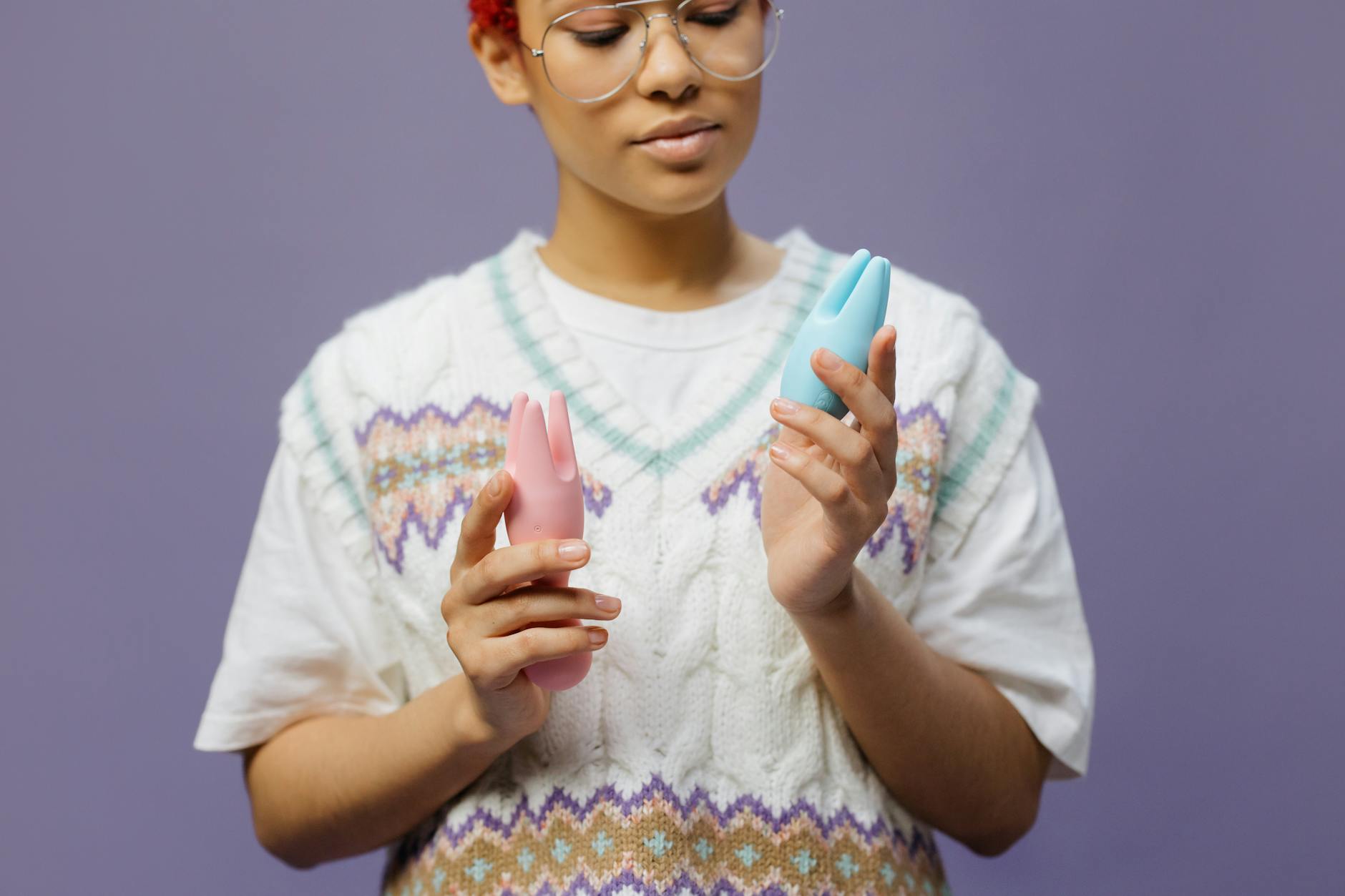
Here's what nobody tells you about aging and pleasure
Your clitoris is not a static organ. It changes over decades. Tissue thickens and thins, nerve density shifts, blood flow patterns evolve. And somewhere between your twenties and your fifties, many people notice that what used to feel good now feels intense, sometimes even uncomfortable. Direct contact that once felt amazing might suddenly feel too much.
This isn't a problem. It's data.
The question isn't "how do I get back to what I felt before." It's "how do I work with what's happening now." That's where a Lemon Vibrator changes the game, because its design is built for nuance rather than pure power.
Why your clitoris becomes more sensitive with time
Three physiological shifts happen as we age:
Nerve sensitivity increases. The clitoral nerve endings actually become more reactive over time. This sounds like it should feel better, and sometimes it does. But more sensitivity also means direct stimulation can feel sharp or overstimulating instead of pleasurable.
The clitoral glans thins slightly. The tissue protecting the nerve endings becomes thinner, which means sensation is more direct and less buffered. A vibration that felt diffused in your twenties now feels concentrated in your forties.
Blood flow patterns shift. Hormonal changes (whether from natural aging, medication, or life transitions) alter how blood flows to the area, which affects both arousal buildup and the intensity of sensation.
None of this means pleasure ends. But it does mean the direct, high-intensity approach that worked for years might need recalibration.
Why Lemon Vibrators work differently as sensitivity increases
Most vibrators are pressure-based. They rely on direct contact and intensity to create sensation. When clitoral sensitivity increases, that approach backfires. You end up numbing the area to find comfort, or backing off entirely because the stimulation feels invasive.
Lemon clitoral vibrators work through suction and gentle pulsing rather than pure vibration. This matters enormously as sensitivity changes. Here's why:
Suction creates sensation through pressure change rather than direct friction. It stimulates the entire clitoral complex, not just the glans. This disperses intensity across a larger area, which feels less sharp and more enveloping as you age.
The pulsing pattern is gentler than traditional vibrator speeds. Lemon Vibrators pulse at a rhythm that mirrors natural arousal buildup rather than overpowering it. For people with increased sensitivity, this feels like your body is being invited into sensation rather than bombarded with it.
You control the intensity through pattern selection, not through adding or removing pressure. A Lemon Vibrator lets you start at pattern 1 and stay there if that's what your body needs. You're not forced to escalate.
How sensitivity changes feel different at different life stages
In your thirties, increased sensitivity often shows up as sharper, more localized sensation. What felt diffused across your whole vulva now feels concentrated in one spot. This is usually a sign that your nervous system is becoming more efficient, not that something is wrong.
In your forties, especially if you're approaching or in perimenopause, sensitivity can fluctuate wildly from day to day. One week intense stimulation feels amazing. The next week the same pattern feels aggressive. This is hormonal, and it's also completely normal.
In your fifties and beyond, sensitivity often stabilizes at a new baseline. The initial intensity usually settles into a different kind of responsiveness. Many people report that they're actually more orgasmic at this stage, just in a different way than before.
Across all these phases, a Lemon Vibrator adapts because you can use it at lower intensities without sacrificing sensation. The suction design means pattern 1 still creates real feeling, unlike a traditional vibrator where the lowest setting might feel like almost nothing.
The practical adjustment: using your Lemon Vibrator as sensitivity shifts
Start with what feels good right now, not what used to work. If you've been using a Lemon Vibrator and suddenly it feels too intense, that's age-related sensitivity increase, not a broken toy.
Try these adjustments:
Switch to pattern 1 or 2 exclusively for a week. Many people skip the lower patterns out of habit. But as sensitivity increases, pattern 1 becomes genuinely pleasurable rather than a warm-up. Give it real time.
Shift from direct contact to angled contact. Instead of centering the opening directly on your clitoris, angle it slightly to the side or toward your mons pubis. The suction still reaches your clitoris, but the sensation is less pointed.
Use it during different arousal windows. As you age, arousal buildup changes. A Lemon Vibrator might feel perfect after 10 minutes of foreplay now, where it used to feel good immediately. Patience in the early stages often changes everything.
Experiment with lubrication changes. Even if you never needed extra lubrication before, adding a small amount of water-based lube can change how a Lemon Vibrator feels on sensitive tissue. It smooths the sensation and can make it feel less direct.
When increased sensitivity signals something else
Not all increased sensitivity is normal aging. If sensation becomes painful (sharp, burning, raw) rather than just intense, or if numbness sets in before pleasure does, that's worth mentioning to a doctor. Certain medications, hormonal conditions, and neurological changes can alter sensation in ways that need professional attention.
But here's the difference: normal age-related sensitivity increase feels strong and concentrated, but it's still pleasurable when you adjust your approach. Pain or numbness don't resolve with a different vibrator pattern. Those need evaluation.
If you've been using a Lemon Vibrator successfully for years and suddenly it stops working, look at what changed. New medication? Hormonal shift? Relationship stress? Often the issue isn't the toy, it's the context around it.
The mindset shift that actually matters
Increased clitoral sensitivity is often treated as a problem to overcome. Actually, it's an invitation to pay closer attention. Your body is becoming more responsive, more precise. The stimulation that works now is probably more attuned to what your nervous system actually needs.
When you stop treating age-related sensitivity changes as a loss and start treating them as information, the whole experience shifts. You're not fighting your body's evolution. You're learning its new language.
A Lemon Vibrator is designed for exactly this kind of intentional exploration. It gives you options that most toys don't. You can stay gentle. You can build slowly. You can change your mind mid-session without feeling like the tool is fighting you.
Your pleasure doesn't peak in your twenties and decline from there. It deepens. It becomes more specific. It demands more honesty about what actually feels good, rather than what's supposed to feel good.
That's not a compromise. That's an upgrade.
FAQ: Clitoral sensitivity and Lemon Vibrators
Can you use a Lemon Vibrator if your clitoris is too sensitive to touch?
Yes, and it's often better than alternatives. The suction design means you're not applying direct pressure. Start with pattern 1, use light contact, and consider using it through clothing or with a thin barrier initially. Many people with sensitive clitorises find that the dispersed pressure of suction feels less invasive than direct vibration.
Does Lemon Vibrator intensity stay the same across all patterns?
No. Lemon Vibrators have distinct patterns that vary in speed and pulsing rhythm. Pattern 1 is gentler and slower, designed for sensitive tissue or extended sessions. Higher patterns increase intensity gradually. As sensitivity increases with age, staying in the lower patterns often becomes more pleasurable rather than less.
Will using a Lemon Vibrator make you even more sensitive over time?
Not in a problematic way. Your nervous system doesn't become "addicted" to vibration. What does happen is that you might become more aware of sensation you'd been ignoring or numbing. That awareness is actually useful. It helps you recognize what your body genuinely wants.
How do you know if increased sensitivity is age-related or a sign of something else?
Age-related sensitivity increase feels like more intense or concentrated sensation, but it's still pleasurable when you adjust your approach. It's often tied to hormonal cycles or transitions. Problematic sensitivity (pain, burning, numbness that doesn't resolve) shows up consistently and doesn't improve with different stimulation patterns. If you're unsure, talking to a doctor who understands sexual health is worth it.
Can hormonal changes make a Lemon Vibrator feel different?
Absolutely. Hormones affect blood flow, tissue thickness, and nerve sensitivity. The same Lemon Vibrator might feel perfect one week and too intense the next, depending on where you are in your cycle or in life transitions like perimenopause. This is normal. Flexibility in how you use it matters more than finding one perfect setting.
Is it normal to need lower intensity as you get older?
Yes. Many people assume they need to escalate to higher vibrations as they age, but the opposite is often true. Increased clitoral sensitivity means lower patterns can feel more pleasurable. Needing less intensity isn't a loss of function. It's your nervous system becoming more efficient.
What changes, and what stays
Your clitoris changes over decades. Its sensitivity increases. Its preferences shift. The stimulation that felt right at twenty-five might feel wrong at forty-five.
But your capacity for pleasure doesn't decline. It evolves.
A Lemon Vibrator is built for that evolution. It's not about forcing your body to feel what it used to feel. It's about meeting your body where it is right now, with tools that actually adapt to you instead of the other way around.
If you're navigating increased sensitivity, that's not a sign to stop exploring. It's a sign that exploring matters more than ever.
Ready to explore intentionally? Start with our buying guide to find the right Lemon Vibrator for where you are now, not where you were.