Here's what nobody tells you about solo pleasure
Most of the conversation around vibrators centers on partnered sex. How to introduce one. How to use it together. How to navigate someone else's feelings about it. But the real revolution happens alone. Solo exploration with a lemon clitoral vibrator isn't a consolation prize when you don't have a partner. It's the foundation that makes partnered pleasure better, clearer, and more honest.
I work with clients who've spent decades calibrating their pleasure around someone else's rhythm, comfort level, or insecurity. When they finally explore solo, they often describe it as the first time they've actually known what they want. That's not an accident.
Why solo play rewires your relationship with pleasure
When you masturbate alone, there's no performance. No checking in with someone else's response. No monitoring their comfort or managing their ego. You're not trying to come quickly so they don't get bored. You're not holding back because you're worried about being "too much."
This matters neurologically. Your brain learns what genuine pleasure feels like when it's not tethered to someone else's presence or approval. Many clients report that after weeks of solo exploration with a lemon vibrator, their orgasms intensify. Some experience orgasms for the first time in their adult lives. Others simply remember what their body wants.
That knowledge transfers. When you know what you like, you can actually tell a partner. Or you can decide you don't want to. Both are more powerful than guessing and hoping they figure it out.
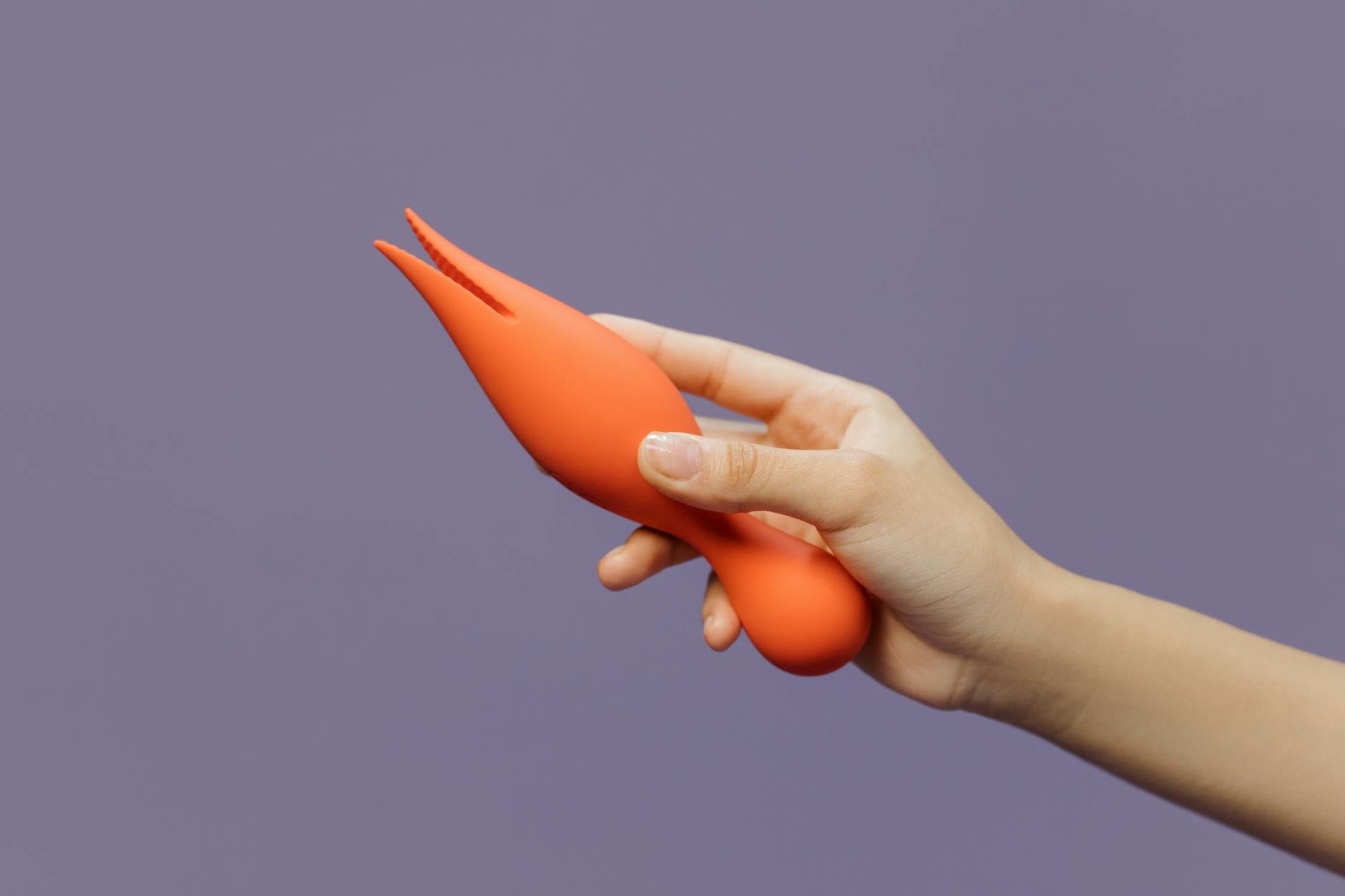
Photo by cottonbro studio on Pexels
The guilt trap (and how to step out of it)
If you're hesitating around solo pleasure, there's usually guilt underneath. Sometimes it's religious conditioning. Sometimes it's a partner's stated or unstated discomfort. Sometimes it's just internalized shame about wanting anything for yourself.
Here's the thing: solo masturbation is not a betrayal of your partner. It's not infidelity. It's not a reflection of their inadequacy. It's taking responsibility for your own nervous system and your own pleasure.
If your partner has expressed discomfort with solo vibrator use, that's a real conversation to have. But it's not a reason to deny yourself. That conversation might sound like: "My pleasure matters to me, and exploring solo helps me know what I want. This isn't about you or about our sex life. It's about me." Some partners will adjust. Some won't. But at least you'll know what you're actually choosing, rather than sacrificing by default.
How to start if you've never done this
Buy the lemon vibrator. Not because you're broken or because something's wrong. Just because you're curious and because you deserve to explore what feels good.
Set yourself up somewhere comfortable. A bedroom where you won't be interrupted is obvious, but anywhere you actually feel relaxed works. The living room at 10 p.m. after everyone's asleep. A locked bathroom. Even your car in a parking lot. The location matters less than the feeling of safety and privacy.
Start with no goal. Not "I need to orgasm." Not "This should feel incredible." Just "I'm going to spend 20 minutes exploring what sensations I like." That frame takes the pressure off completely. You're not failing if you don't come. You're not failing if you find out you don't like vibration at all. You're gathering data.
Start the lemon vibrator at the lowest setting. Touch it against your clitoris, your labia, the area around your inner thighs. Notice what feels good. Some people like direct clitoral stimulation. Some prefer vibration around the area rather than directly on it. Some like it best through fabric. Let your body tell you.
Pacing and rhythm that actually work
Most people rush through masturbation. There's a phantom timer running. You're trying to finish before someone gets home or wakes up or notices the locked door.
When you're alone and you can actually take your time, everything changes. Try spending 10 minutes just with sensations before you even turn on the lemon vibrator. Touch yourself with your hands. Notice what your body wants.
Then use the vibrator at low speed. Build slowly. Some of my clients spend 30 or 40 minutes in solo sessions. They're not all building toward orgasm. They're just exploring pleasure as an end in itself. That's radically different from the quick-release model most of us learned.
If you're worried about nerve numbness from extended vibration, alternate. Use the vibrator for 2-3 minutes, then your hands for a few. The change in sensation actually heightens everything.
What to do with what you learn
After a few weeks of solo exploration, you'll know things about yourself. Maybe you like sustained pressure more than rapid vibration. Maybe you like building up slowly and then fast stimulation at the end. Maybe you prefer starting with your hands and finishing with the lemon clitoral vibrator. Maybe you come best when you're thinking about something specific.
All of this is valuable. Write it down if that helps. Not in a clinical way. Just notes: "Pattern 2 on the Lem feels best when I've had 15 minutes of buildup. I like indirect stimulation more than direct. I come faster when I'm thinking about..." whatever.
Then decide what you want to share with a partner and what you want to keep private. Some people tell their partner everything. Some keep solo exploration entirely separate from partnered sex. Both are fine. You get to choose.
If you're reconnecting with a partner after emotional distance or rebuilding intimacy after conflict, solo exploration becomes even more powerful. You show up to partnered time with actual knowledge of your body and clear communication about what works. That's the opposite of asking your partner to guess or perform.
The timing conversation with partners
Here's what I see happen in relationships: one partner discovers solo pleasure with a lemon vibrator and suddenly feels more alive. The other partner sometimes interprets that as a problem. "Does this mean they don't want me anymore? Am I not enough?"
The answer is no. But the conversation itself is delicate. Try this frame: "I've been exploring my pleasure solo, and it's helped me understand my body better. I want that knowledge to make our sex life deeper, not replace it. Here's what I've learned about what feels good to me."
That's collaboration, not criticism. Most partners respond well to feeling included in the discovery, even if they're not physically present during solo sessions.
Solo pleasure is not a sign something's wrong
I work with couples in deeply satisfying relationships where both partners have active solo lives. I work with singles who use lemon vibrators not because they're lonely but because they value their own pleasure. I work with people in long-term partnerships who masturbate regularly and whose partnerships are stronger for it.
Solo exploration is not a symptom. It's not a substitute. It's not Plan B. It's a foundation.
People also ask
Is it normal to prefer solo pleasure to partnered sex?
Yes. Some people find solo pleasure more reliably satisfying because there's no pressure, no performance anxiety, and no one else's needs to consider. That doesn't mean partnered sex is bad or unnecessary. It just means solo pleasure has real advantages. If you're consistently choosing solo over partnered sex and your relationship status supports that, you're fine. If you're in a partnership and consistently preferring solo to partnered intimacy, that's usually worth exploring in conversation with your partner or a therapist.
Will my partner feel threatened if I use a lemon vibrator solo?
Some will, and some won't. It depends on their relationship history, their own insecurities, and how you frame it. The clearest approach is honesty: "I want to understand my own pleasure better. This isn't about you or about our relationship. It's about me." If your partner remains threatened after that conversation, that's worth examining together. Their discomfort might be about something deeper than the vibrator.
How often should I masturbate with a lemon clitoral vibrator?
As often as you want. There's no "right" frequency. Some people have a solo practice a few times a week. Some do it daily. Some go weeks without it and then have a session. What matters is that it feels like a choice, not an obligation or a replacement for partnered sex.
Can using a vibrator alone desensitize me to partnered touch?
Not if you're intentional about it. The key is variety. Use the vibrator sometimes. Use your hands sometimes. Have partnered sex sometimes. The nervous system actually responds better to novelty and variety. The vibration itself doesn't cause permanent desensitization, though temporary numbness during extended sessions is normal. That's why switching between the vibrator and hand stimulation helps.
What if I've never had an orgasm and I want to explore solo?
A lemon clitoral vibrator can be genuinely helpful here. The stimulation is consistent and targeted in a way hands alone often aren't. Start with no expectation of orgasm. Just explore sensation. Sometimes removing the goal of coming actually makes it easier for your body to relax enough to have one. If after several weeks of solo exploration you're still not experiencing orgasm, it's worth talking to a gynecologist or a sex therapist. There can be physical or psychological factors that respond well to professional support.
Is it okay to keep my solo pleasure practice private from my partner?
Completely. You don't owe your partner a detailed inventory of your masturbation habits. Some couples are highly open about solo practices. Some keep them private. Both are valid as long as you're not lying about your time or creating deception in the relationship. Privacy about your body is a reasonable boundary.
The actual point
Your pleasure matters independently of anyone else. A lemon vibrator is just a tool that makes solo exploration easier and more consistent. But the real work is internal: believing you deserve this time, that your body's responses matter, and that knowing yourself makes you a better partner and a more grounded person.
Start small. Give yourself permission. Then listen to what your body actually wants, without anyone else's agenda in the room.
If you want to explore how partnered and solo pleasure can coexist, or if you're working through relationship dynamics around pleasure, reaching out to a therapist can help you clarify what you actually want and how to communicate it. Get in touch if you'd like guidance.