Let's start with what nobody tells you
Antidepressants save lives. They also make orgasms harder to reach. Up to 40 percent of people taking SSRIs or SNRIs report sexual side effects. That's not a myth, not weakness, not something to push through silently. It's a documented pharmacological reality.
Here's what happens: serotonin-regulating medications improve mood by evening out serotonin levels in the brain. The same mechanism that lifts depression also suppresses arousal signals, dulls genital sensation, and makes orgasm feel distant or unreachable. You're not broken. Your nervous system is working exactly as the drug designed it to.
But here's the part that matters: restoring pleasure after antidepressants plateau doesn't mean stopping medication or white-knuckling through numbness. It means understanding how sensation works differently under medication, and using tools like lemon clitoral vibrators that work with your brain's current chemistry rather than against it.
How antidepressants actually change sensation
SSRIs (like sertraline, paroxetine) and SNRIs (like venlafaxine, duloxetine) increase available serotonin in the synaptic space. Serotonin has receptors all over your body, including in the genital tissue and the brain's pleasure centers. When serotonin floods those pathways, it calms anxiety and lifts mood. It also dampens the urgency of sexual signaling.
People describe it differently depending on the medication and their neurology. Some report complete numbness. Others feel touch but can't translate it into arousal. Still others can build arousal but hit a wall before orgasm. And some experience all three at different times.
The confusing part is that this doesn't mean desire disappears. Your brain still knows you want sex. Your body just isn't receiving or broadcasting the signals clearly anymore. It's like someone lowered the volume on your nervous system's pleasure channel.
Why a lemon vibrator works when sensation is flattened
Traditional vibrators work through direct mechanical vibration against tissue. If sensation is muted, you need more intensity, more time, and more direct pressure to break through. That can feel exhausting, or even impossible.
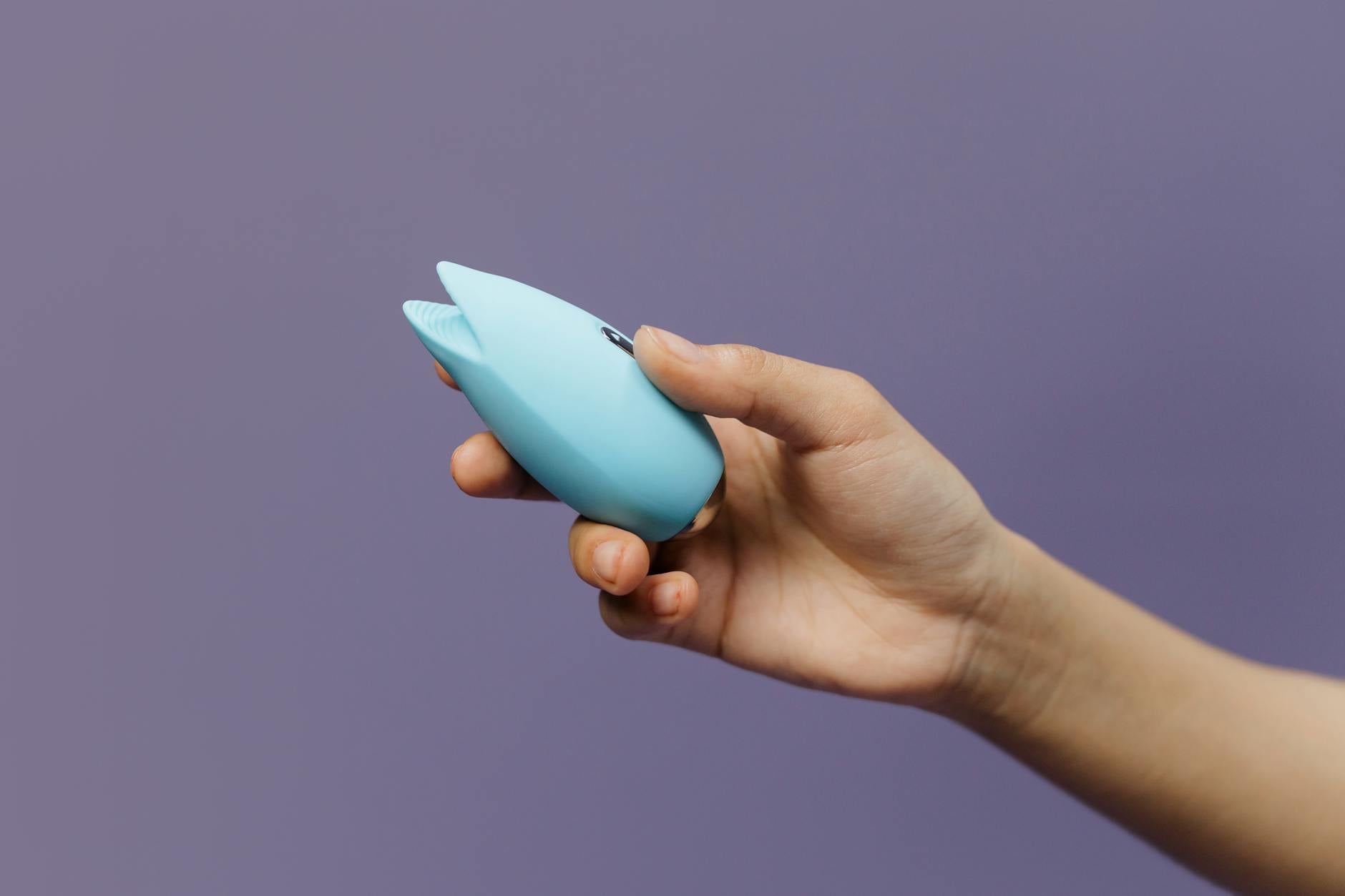
Lemon clitoral vibrators use air-suction technology instead. This works differently on your nervous system. Rather than sending vibration through tissue, suction stimulates the nerve clusters around the clitoris through gentle pressure changes. The sensation is deeper, less dependent on surface sensitivity, and often easier to feel when your nervous system is quieter.
Many people report that suction breaks through antidepressant-related numbness in ways traditional toys can't. You're not forcing sensation through a dampened system. You're activating different neural pathways that the medication hasn't quieted as much.
I've worked with clients who found that switching to a lemon vibrator was the turning point between giving up on pleasure entirely and finding a pathway back.
The practical steps that actually work
Start with the lowest setting. Suction toys come with multiple intensity levels for good reason. Your nervous system is still processing sensation normally, it's just operating at lower volume. Begin at setting 1 or 2. Resist the urge to jump to intensity because you're not "feeling it yet." Your body is learning the sensation. Give it five to ten minutes before adjusting.
Budget time differently than you used to. Antidepressants don't just reduce sensation, they extend the timeline for arousal and orgasm. Where you might have reached orgasm in ten minutes pre-medication, you might need twenty to thirty minutes now. That's not a problem to solve. That's information to work with. Plan for longer sessions. Stop expecting the old pace.
Experiment with positioning. Suction works best with direct contact on the clitoral body or head. Try different angles and pressures. Some people find that lying on their back works better with antidepressants because it reduces pressure on the clitoris from clothing or body weight. Others prefer side-lying. There's no "right" position. There's only what your specific nervous system responds to right now.
Use lube even if you don't think you need it. Antidepressants can reduce natural lubrication, especially in people with vulvas. Water-based lube helps create a better seal for the suction to work and reduces any friction from positioning. This is basic physics, not a sign that something is wrong with you.
Separate pleasure sessions from penetration or partnered sex at first. If you're partnered, one of the cruelest parts of antidepressant sexual side effects is the pressure to perform during sex while your body isn't cooperating. Give yourself solo time to learn how your nervous system works on medication before adding another person's expectations into the mix.
The psychological piece (which is half the battle)
Antidepressants don't just change your nervous system. They change your relationship to pleasure. After months of struggling to orgasm or feeling nothing during sex, many people develop anticipatory anxiety about sex itself. You start expecting it to be difficult. Your brain gets ready for disappointment. That expectation itself dampens arousal further.
The first time you use a lemon clitoral vibrator after antidepressants have flattened sensation, you might not have an earth-moving orgasm. You might have a modest one. That's enough. That's proof that your body still works. That's a data point that says "okay, this direction is viable."
Many couples try to push through antidepressant sexual side effects by increasing frequency or intensity of partnered sex. That usually backfires. It builds resentment, performance anxiety, and more numbness. Solo exploration with a tool like a lemon vibrator gives you permission to rebuild a relationship with your own pleasure on a timeline that works for your medicated nervous system, not on a timeline determined by side effects or partner expectations.
When to talk to your doctor
If your antidepressant is working well for your mood but sexual side effects are severe enough that they're affecting your quality of life, talk to your prescriber. You have options.
Some people switch to medications with fewer sexual side effects (bupropion and mirtazapine have lower rates of sexual dysfunction). Some add a second medication to counteract the sexual side effects (like buspirone or sildenafil). Some adjust timing by taking their dose right after sex instead of before. Some find that a lower dose maintains the mood benefit with fewer sexual symptoms.
Your doctor doesn't know how much this matters to you unless you tell them. And don't expect them to bring it up first. Sexual side effects are underreported because patients feel embarrassed and doctors often don't ask.
That conversation matters. But in the meantime, a lemon clitoral vibrator gives you a way to restore sensation and pleasure without waiting for medication adjustment or playing Russian roulette with your mental health stability.
What changes as your body adapts
Antidepressants don't permanently destroy pleasure capacity. Your nervous system adapts. Some people find that after three to six months on medication, sensation becomes slightly less muted as the body adjusts. Others find that their specific dose has reached an equilibrium. Still others need to adjust medication strategy.
What I notice clinically is that people who actively explore pleasure during the initial sexual side-effect period, rather than withdrawing from sex entirely, tend to adapt faster and maintain better satisfaction long-term. A lemon vibrator is a low-pressure, no-judgment way to keep that exploration going while your nervous system and your medication find their groove.
You're not broken. Your medication is working. Your pleasure isn't gone. It's just operating at a different frequency right now. And there are tools, like lemon air-suction vibrators, designed for exactly this.
Common questions about antidepressants and pleasure
Will stopping antidepressants restore my orgasms immediately? Possibly, but not automatically. Your body needs weeks to recalibrate neurologically. And stopping antidepressants cold without medical supervision can trigger withdrawal symptoms or mood relapse. If sexual side effects are severe, talk to your prescriber about alternatives before discontinuing.
Is it normal for the lemon vibrator to feel different at different parts of my cycle? Absolutely. Hormonal fluctuations during menstruation or ovulation can change how suction feels on your clitoris. This is expected, not a malfunction. Some people find certain cycle phases work better with higher suction intensity.
Can I use a lemon vibrator if I'm on multiple psychiatric medications? Yes. Sexual side effects come from any medication that affects serotonin, dopamine, or norepinephrine. Multiple medications can compound the effect, but suction technology still works. If anything, you have more flexibility in exploring different intensities and settings to find what works with your specific neurochemistry.
Does a lemon clitoral vibrator feel different than other toys when I'm on antidepressants? Most people report yes. Suction activates different nerve pathways than vibration. Many find it breaks through medication-related numbness more effectively. But individual variation is huge. What works for one person might not for another.
How long before I notice improvement after starting to use a lemon vibrator? Some people feel a difference the first session. Others need three to five sessions to let their nervous system learn the new sensation and for anticipatory anxiety to drop. Don't judge on the first try. Give yourself a series of experiences.
Should I tell my partner I'm using a lemon vibrator to work through sexual side effects? That depends on your relationship dynamic. If you're partnered and you want sex to be part of your intimate life, transparency matters. Framing it as "I'm exploring a tool that helps my body respond better right now" opens conversation rather than closing it. Secrecy tends to build distance.