The honest conversation nobody's having
Let's be real: antidepressants save lives. They also, for a lot of people, make orgasm feel like trying to reach something behind frosted glass. You know it's there. You just can't quite touch it. The numbness isn't in your head, and it isn't your fault. It's neurochemistry.
Here's what I see in my practice: people who start SSRIs or SNRIs often report that sensation dulls within 2-3 weeks. The stimulation that used to feel electric now feels muted. Orgasm takes longer. Sometimes it doesn't arrive at all. And then comes the guilt, because you're supposed to be grateful that your depression is lifting, and you are, but you also miss your own body.
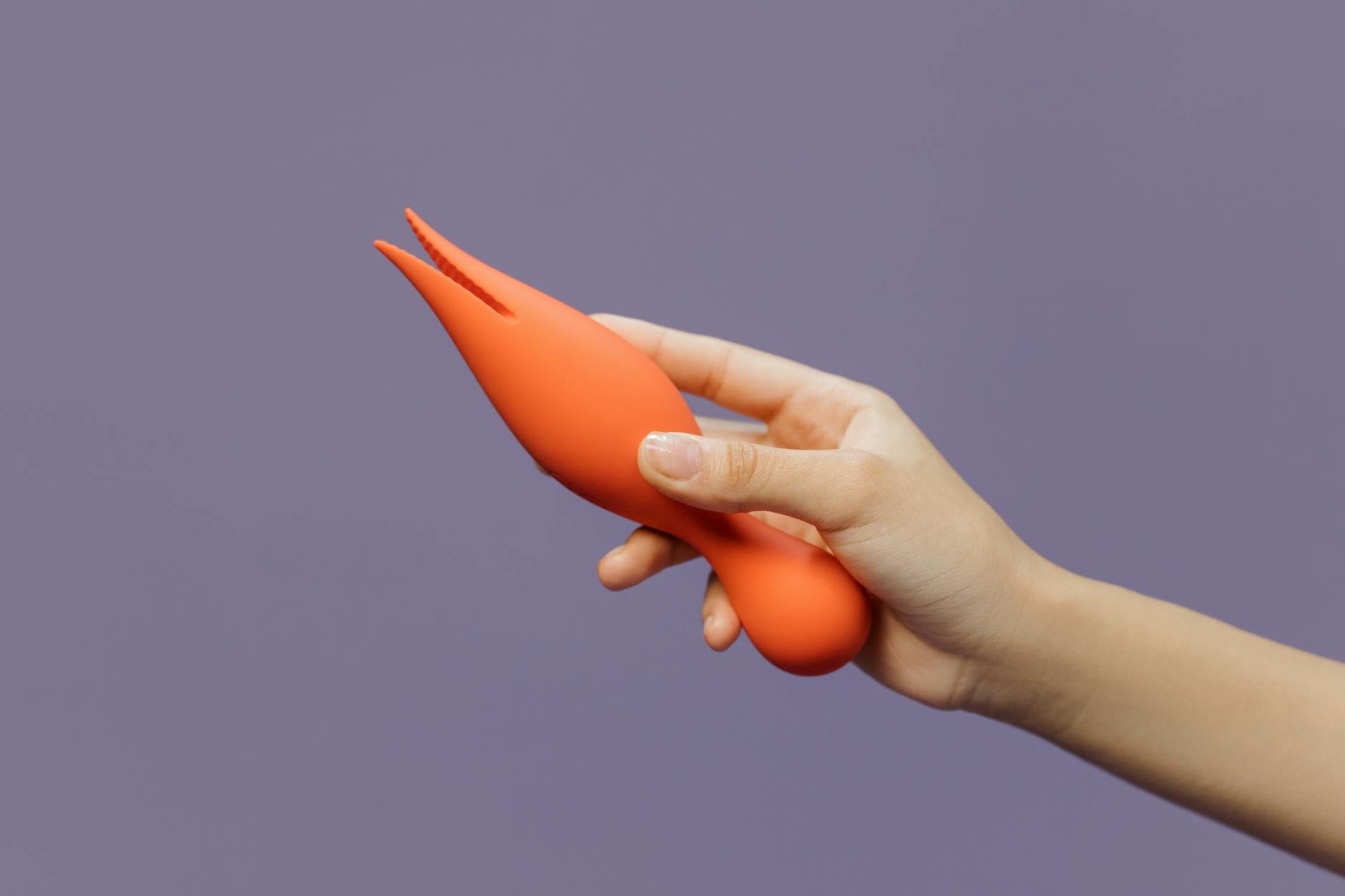
I want to tell you what's actually happening and why a lemon vibrator, specifically, can be a real game-changer in that gap between numbness and recovery.
What antidepressants do to your nervous system
SSRI and SNRI medications work by increasing serotonin availability in your brain. That's the point. But serotonin receptors don't exist only in your brain. They're everywhere. Your gut, your skin, your genitals. When serotonin rises, it can dampen the sensitivity of nerve endings and slow the cascade of electrical signals that build arousal.
Think of it this way: your nervous system usually sends a signal, and your body amplifies it. Antidepressants turn down the volume on that amplification. The signal is still there. The receiver is just quieter.
What changes specifically:
- Genital sensation dulls. Direct touch feels less intense because the sensory neurons are less responsive.
- Arousal builds slower. It takes longer for your brain to register stimulation and trigger the autonomic response.
- Orgasm delays or disappears. The pelvic floor and clitoral tissues aren't contracting with the same force or speed, and the cascade of brain activity that triggers release is dampened.
- Desire itself can fade. This isn't always about sensation. Sometimes the medication's effect on dopamine (the pleasure and motivation neurotransmitter) flattens interest in sex altogether.
The good news: this is not permanent, and it's not your baseline. Your body hasn't changed. The filter has.
Why lemon vibrators work differently when you're on antidepressants
Here's where it gets practical.
When sensation is dampened, you need stimulation that is both powerful and smart. A lemon clitoral vibrator uses suction technology, which works on a different principle than traditional vibration. Instead of relying on friction sensitivity (which antidepressants blunt), suction stimulates deeper nerve clusters and triggers a broader, more intense neural response across the pelvic floor.
Think of the difference this way: a vibrator shakes. Suction pulls. If your nerve endings aren't responding to shaking, suction activates different neural pathways altogether.
Lemon vibrators are particularly effective because they:
- Create broader stimulation. The suction cup covers a larger surface area than direct vibration, so fewer nerve endings means more overall activation.
- Work through tissue layers. Suction penetrates tissue in a way surface vibration can't, reaching deeper nerves that may still be responsive even if surface sensation is dulled.
- Require less direct friction. When your skin is sensitive to touch because of medication, a suction-based lem vibrator feels gentler while delivering more intense sensation underneath.
- Build intensity progressively. Most lemon clitoral vibrators have multiple intensity settings, letting you start low and work up gradually, which helps your nervous system register the sensation.
The settings that work when your body is in medication mode
If you're already using a lemon sucker or thinking about trying one, here's what actually helps.
Start with pattern 1 or 2, not your old baseline. Your medication has literally changed what your baseline is right now. That pattern 5 you used to love will still be there. Right now, your nervous system needs permission to warm up.
Plan for longer sessions. Arousal takes longer. Budget 20-30 minutes instead of 10. Your body isn't broken. It's just processing stimulation more slowly. Give it time.
Combine it with lubrication. Even though antidepressants can affect lubrication production, adding water-based lube reduces friction and makes suction feel smoother and less jarring on tissue that's already processing stimulation differently. This also signals to your nervous system that something pleasurable is happening, which can help override the numbness.
Use it during peak medication window. Most SSRIs and SNRIs take about 90 minutes to reach peak levels in your bloodstream. If you're taking it in the morning, mid-afternoon is when your system is most stable. That can actually make sensation a little sharper. Small window, but it exists.
Experiment with position. Lying on your back lets you relax fully. Lying on your stomach can create a different kind of pressure. Being upright changes blood flow. Your antidepressant is already changing how your body responds. Different positions give you different feedback. Try them all.
When to talk to your doctor (and what to ask)
If numbness is severe and hasn't improved after 8-12 weeks on medication, mention it. Several things are worth discussing:
- Timing adjustments. Some people find taking their dose at night instead of morning, or vice versa, shifts when the flattening happens.
- Dose adjustment. Sometimes lowering the dose slightly improves sexual function without reducing antidepressant benefit. This isn't always possible, but it's worth asking.
- Medication switch. Some SSRIs and SNRIs affect sexual function less than others. Wellbutrin, for instance, often has fewer sexual side effects. If your current medication is causing real distress, alternatives exist.
- Augmentation. Adding something like buspirone or bupropion can sometimes offset sexual side effects. Again, only with medical guidance.
The key: your mental health comes first. You're not choosing between depression and pleasure. But you also don't have to accept complete numbness. Good doctors know this and will work with you.
The bridge between numbness and recovery
Here's what I want you to know that most resources don't say: using a lemon vibrator while you're on antidepressants isn't a workaround. It's a tool for your nervous system to remember what pleasure feels like.
Your brain is being rebalanced. Your body is adjusting. That takes time. In the meantime, a lemon clitoral vibrator can help keep sensation alive, keep your body engaged, and prevent that secondary worry (anxiety about losing pleasure) from making the numbness worse.
Some people find that after a few months on their medication, sensation starts returning naturally. Others find they need to stay on antidepressants long-term and learn to work with their body's new baseline. Both are fine. Both are real.
What matters is that you have tools. You have information. You don't have to suffer through this silently thinking it's permanent or shameful. It's a predictable side effect of medication that's keeping you alive. And there are ways forward.
People also ask
Can you use a lemon vibrator right after starting antidepressants?
Yes. In fact, some people find using one within the first week helps them notice the shift in sensation more clearly, which can be useful information for your doctor. Don't wait until you're deeply numb to start exploring. The earlier you understand how your body is changing, the better you can adapt.
Do lemon suction vibrators work better than regular vibrators for medication-related numbness?
Not universally, but for most people taking SSRIs or SNRIs, yes. Suction engages different nerve clusters than vibration alone. If you've only tried traditional vibrators and sensation is flat, a lemon clitoral vibrator is worth testing. That said, some people respond better to wand vibrators or even to combining multiple tools. Your body is individual.
How long does it take for sensation to return after starting antidepressants?
It varies wildly. Some people notice improvement in 6-8 weeks. Others take 3-6 months. Some people adjust their dose or medication and feel it within days. If you're 6 months in and completely numb, that's worth discussing with your doctor. It doesn't always mean you have to stop the medication, but you have options.
Will using a lemon vibrator help train my body to feel sensation again?
Technically, no single toy trains your body. But yes, regular stimulation does help. Your nervous system benefits from repeated, positive sensation. If using a lemon vibrator is part of a pattern where you're regularly engaging with your body in a pleasurable way, that repeated stimulation can help your nervous system stay awake and responsive, even while antidepressants are dulling things.
Is it okay to use lemon vibrators if I'm on other medications too?
In general, yes. Lemon vibrators are vibrators. They interact with your body mechanically and neurologically, not chemically. That said, if you're on other medications that affect sensation, blood pressure, or heart rhythm (like some blood pressure meds or heart medications), mention that you're using a vibrator to your doctor just so they have the full picture. It's rarely a problem, but transparency helps.
Should I tell my partner that antidepressants are affecting my sensation?
Yes. Not because it's their job to fix it, but because confusion hurts both of you. If you suddenly need longer warm-up time or different stimulation, your partner will notice. Telling them "my medication is changing how my body responds" prevents them from feeling rejected. It's medical, not personal. That distinction matters for your relationship.